

If you're replacing copper lines for elevator phones or fax machines, there's a good chance a second question has come up: what about the phones on everyone's desk?
It's a fair question. A POTS replacement project is a natural time to take a look at your phone system too. But that doesn't mean you have to change everything at once.
This blog covers what IP phone systems are, how they work (think call routing, call recording, and team messaging), and when it makes sense to modernize voice alongside your analog lines. In short, IP phone systems handle your staff, and POTS replacement handles supported analog equipment.
What Are IP Phone Systems?
IP phone systems use voice over internet protocol (VoIP) to carry calls as digital audio packets over a local network or the internet. Traditional phone systems rely on dedicated telephone lines and analog technology tied to the public switched telephone network (PSTN).
A typical system includes:
- IP phones: IP desk phones and other VoIP phones connect by Ethernet or Wi-Fi.
- Softphones and mobile apps: Staff make calls from a computer or mobile device.
- A call control platform: This might be an on-site IP PBX or a cloud platform run by a VoIP provider off-site.
- Connections to the outside world: Session Initiation Protocol (SIP) links the system to the phone network.
Business VoIP systems are typically part of a larger unified communications platform that combines voice, video, and messaging. With cloud-hosted VoIP phone systems, the provider handles most ongoing maintenance, so you don't need extensive technical knowledge to run it.
How Are IP Phone Systems Different From Analog Phone Lines?
Analog lines give you a dial tone and basic calling. IP phone systems add advanced features that support modern business communications:
- Call routing, call queues, and auto attendants for inbound calls
- Call forwarding to a mobile device when you're away from your desk
- Call recording, call monitoring, and call transcription
- Voicemail transcription and voicemail to email
- Video calling, video meetings, and video conferencing
- Team chat and live chat messaging
- CRM integrations
- Built-in analytics and reporting on call volume
They also scale more easily. Adding phone extensions or virtual phone numbers usually takes a software license and a change in a dashboard, not new wiring. That makes it simpler to support growth across multiple locations and remote teams.
Many service plans include unlimited domestic calling (sometimes listed as unlimited calling), and international calling is often cheaper than on traditional landline phones, which can lower phone bills and add up to real cost savings. VoIP calls can also reroute to another site or a mobile app during an outage, which supports business continuity.
What Do IP Phone Systems Need to Work Well?
IP phone systems require a stable internet connection. Call quality depends on internet bandwidth and network conditions. Latency and packet loss can cause choppy audio or dropped calls, so your network matters as much as your phones.
Before you switch to any VoIP system or VoIP service, check:
- Internet access and bandwidth at each site
- Switches that can prioritize voice traffic
- Backup power for network gear
- A wireless backup or second circuit if voice is mission-critical
Emergency calling matters too. Under Kari's Law, multi-line phone systems have to let users dial 911 directly, with no extra digit like "9" first. The FCC's MLTS 911 rules also cover notification and dispatchable location requirements.
A good VoIP provider should help you set these up.
When Should You Modernize Voice Alongside POTS Replacement?
You don't have to do both at once. But it often makes sense when:
- Your PBX is aging: Parts are hard to find, or desk phone support is ending.
- A contract is up for renewal: It's a natural point to compare business phone systems.
- You're moving or opening an office: New cabling is a good time to plan IP phones.
- Your team works remotely: Basic calling on a desk phone no longer fits how people work.
- You're already doing a line inventory: One assessment can cover both people and equipment.
- You are looking to drive efficiency: With VoIP, you can integrate your CRMs and other business systems.
If none of those sound familiar, it's perfectly fine to handle POTS replacement now and voice later.
Can IP Phone Systems and Analog Equipment Work in the Same Building?
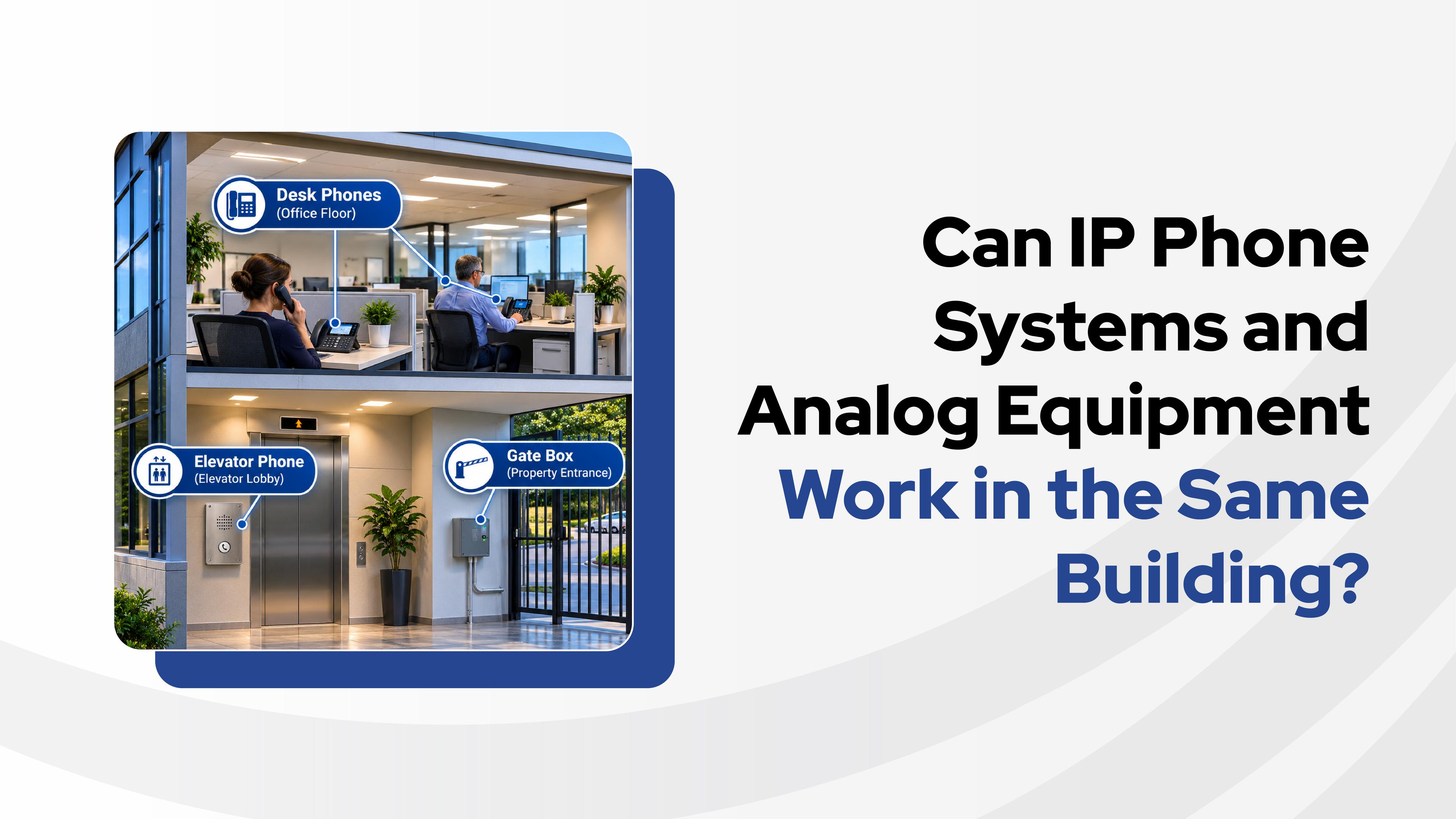
Yes. Most buildings need both. An IP phone system brings voice calling to your staff. Supported analog devices like elevator phones, gates, and fax machines usually belong on a POTS replacement solution that keeps their analog interface and backup power.
Planning them together means one assessment, one partner, and one communication infrastructure plan for your whole communications system.
What Should You Plan for Before Switching to an IP Phone System?
Small businesses and larger teams alike should map out:
- Users and roles: Who needs a desk phone, a mobile app, or a contact center seat?
- Call handling: How should inbound calls, outbound calls, and after-hours calls flow? List the call handling features you need.
- Phones: Will you buy or rent? Do you need conference phones? Or you may opt for softphones - webphones or mobile applications.
- Management features: Who will add users and change call routing?
- Integration: Do you need seamless integration with your CRM or other tools?
When you compare small business plans or search for the best VoIP phone systems, don't stop at price. Ask about uptime, support, training, and how the VoIP solutions handle outages.
How Does Simplicity VoIP Approach IP Phone Systems?
Simplicity VoIP offers business VoIP with a webphone and mobile app, chat and SMS, an online portal for phone system management, SimplicityCOLLAB video conferencing, and call recording. Our phones and equipment include Yealink and Poly IP phones, which you can buy or rent through a Device as a Service agreement, with on-site training and support. Wireless backup keeps calls going if your primary internet connection fails.
We also offer Simplicity POTS Replacement, so your VoIP telephony and your analog lines can be planned together.
Is Now the Right Time?
If you're already looking at your analog lines, it's a good time to look at your phone system too. Even if you wait on voice, you'll know what you have and what comes next.
Simplicity VoIP can review your business phone system and your analog lines in one pass, so you know exactly where you stand. Ready to get started? Request a Quote