

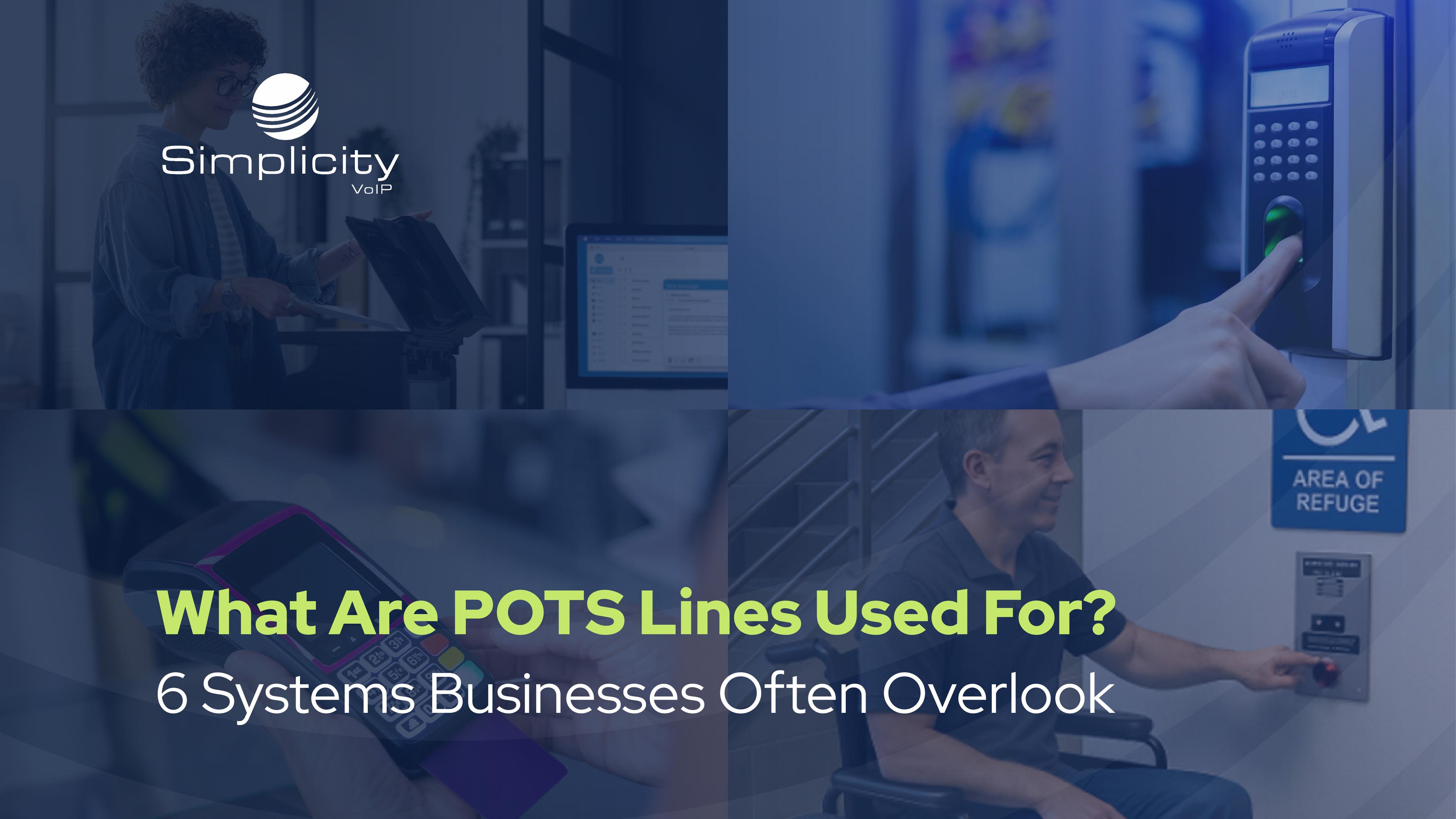
Wondering, "What are POTS lines used for today?" You have to look past those old phones connected to the central office and global network, the ones, unfortunately, still sitting on some employees' desks.
Many organizations have moved their business phone service beyond the PSTN, or Public Switched Telephone Network, to a VoIP phone system that turns voice signals into digital data transmitted over the internet, or unified communications. But Plain Old Telephone Service (POTS) lines might still be connected to equipment somewhere else in the building. These connections are easy to miss because they aren't part of everyday phone calls or visible like desk phones.
Before planning a POTS line replacement, find out what each line supports. An inventory can show you which connections still serve a purpose, which are no longer needed, and which modern alternatives might work with the equipment already in place.
A quick note about security systems:
Some security alarm systems were installed with dedicated analog phone lines that communicate with a telephone company monitoring provider.
Because these connections often sit outside the main telephone system, they can remain in service long after an office moves away from a traditional analog phone system. A company might use cloud-based phone systems for employees while an alarm panel still relies on older telephone lines.
Before changing the service, confirm the panel's communication requirements, backup power needs, and monitoring configuration. Safety-related equipment should also be part of business continuity planning.
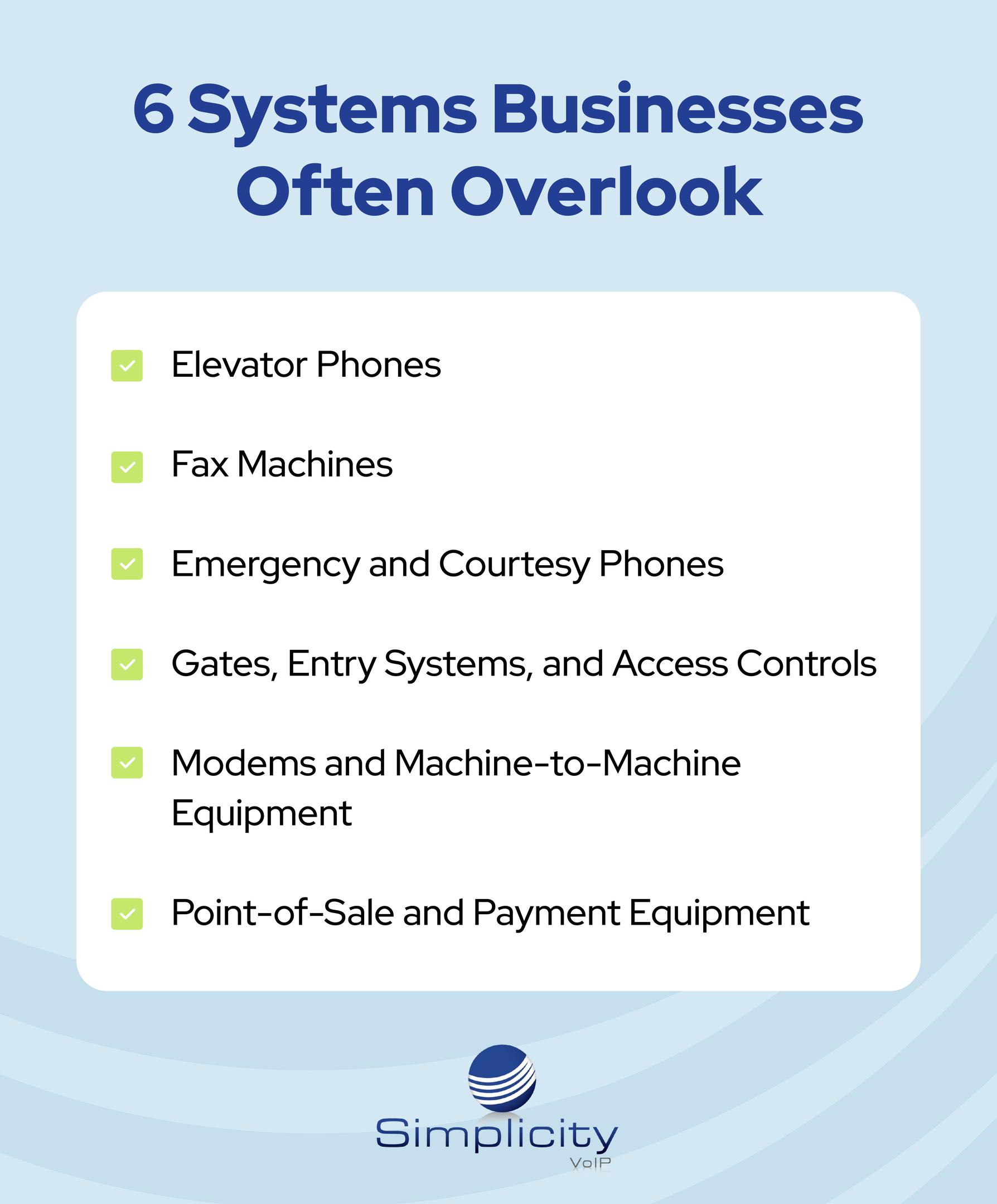
1. Elevator Phones
Elevator phones are another common place to find analog lines.
An elevator can use a dedicated line for emergency communication even if the organization has moved to VoIP lines, or voice over internet protocol. These emergency lines can see little routine use, which makes them easy to overlook during a review of phone services.
Businesses with multiple locations should check each property individually. The right POTS replacement option needs to account for the elevator system itself, along with applicable communication and backup-power requirements.
2. Fax Machines
Fax machines are still connected to analog service in many workplaces, particularly where established workflows or legacy devices remain in use.
That doesn't automatically mean the fax machine needs to go.
Some organizations choose digital fax. Others keep existing equipment and use a compatible replacement service or adapter. The better choice depends on how faxing fits into the business and whether maintaining the current workflow still makes sense.
3. Emergency and Courtesy Phones
Emergency phones in parking garages, stairwells, lobbies, campuses, and other shared spaces can also use POTS. The same can be true of other emergency systems installed separately from the main phone environment.
Traditional POTS service has a different power model from newer services. POTS lines draw power from the provider network; a basic wired phone could stay operational, even during some local power outages.
4. Gates, Entry Systems, and Access Controls
Older gate controllers, intercoms, and entry systems might use phone lines to contact a receptionist, tenant, security desk, or another destination.
Because these systems might have been installed long before today's communications systems, they aren't always included in current network documentation.
Some analog devices can continue operating with an appropriate replacement connection. Others may support newer IP or cellular options. When a replacement relies on an internet connection, the business should also consider redundancy and whether the connection can reliably support the application.
5. Modems and Machine-to-Machine Equipment
POTS lines have also been used for modems and specialized equipment that need to transmit data, including building controls, remote diagnostics, and industrial systems.
Older telecom terminology can make these connections harder to identify. Plain old telephone service isn't the same as a digital subscriber line or integrated services digital network, even though all three technologies have been associated with copper wires and copper infrastructure.
Traditional POTS carries analog electrical signals across the telephone network, while newer IP services transmit digital data using Internet Protocol. Knowing what type of service a device actually uses helps prevent the wrong connection from being removed.
6. Point-of-Sale and Payment Equipment
Some older point-of-sale terminals and payment devices were designed to use traditional landline phones or dedicated analog connections.
Newer systems often rely on a stable internet connection like broadband or even mobile networks, but older hardware can remain in service for years. Across several locations, those connections can add recurring monthly service fees, especially when older service contracts haven't been reviewed recently.
Before changing a line, confirm what the equipment supports. If new hardware is required, planning ahead can also help avoid problems caused by availability or supply chain delays.
Why Are These Lines So Easy to Miss?
The main office phone system is usually the first thing businesses modernize to gain a more reliable solution.
That can leave older connections operating in the background. Employees might be using mobile phones, cloud calling, and modern collaboration tools while elevators, alarms, gates, or other equipment still communicate across copper lines.
How Do You Inventory Existing POTS Lines?
Start with invoices from telecommunications providers.
Look for standalone numbers, unfamiliar telephone service charges, older line descriptions, and services that don't correspond to current employee phones.
Then walk the facility and match each line to a device. Check elevator equipment, alarm panels, fax stations, gates, payment terminals, equipment rooms, and other places where analog phone lines might end.
For each connection, track:
- The number and location
- What is connected to it
- What the device does
- Who maintains the equipment
- Any emergency, monitoring, or power requirements
- Whether the service is still being used
- What replacement technologies the device supports
This gives you a clearer picture of what you have before you replace POTS lines.
Does Finding an Analog Device Mean You Have to Replace It?
No.
The device and the service carrying its communications are two separate decisions.
Some equipment can continue operating with a compatible replacement solution. Other devices might be worth replacing because of age, support status, or changing business needs.
That distinction becomes increasingly important as businesses evaluate the copper sunset and changes to copper networks. Moving away from older network infrastructure doesn't automatically require replacing every analog device attached to it.
Depending on the application, replacement choices can include IP-based services, cellular connectivity through mobile networks, adapters, or purpose-built solutions.
For the primary business voice environment, SIP trunking or a cloud VoIP system can provide features like flexible routing and high-quality calls. As with any IP-based voice service, call quality depends partly on the network and the quality of the connection behind it.
Inventory First, Then Choose the Replacement

The useful question isn't where POTS used to be. It's where your organization still depends on it today.
An elevator phone, fax machine, gate, modem, emergency phone, or payment terminal may be connected to a service your IT team rarely sees.
Finding those connections before modernization begins gives you time to confirm requirements, talk with equipment vendors, and determine the right path for each use case. In some cases, that means replacing the line while keeping the device.
Simplicity VoIP can help identify existing POTS lines, determine what they're supporting, and recommend an appropriate migration path without assuming every analog device needs to be replaced.