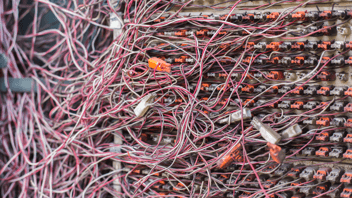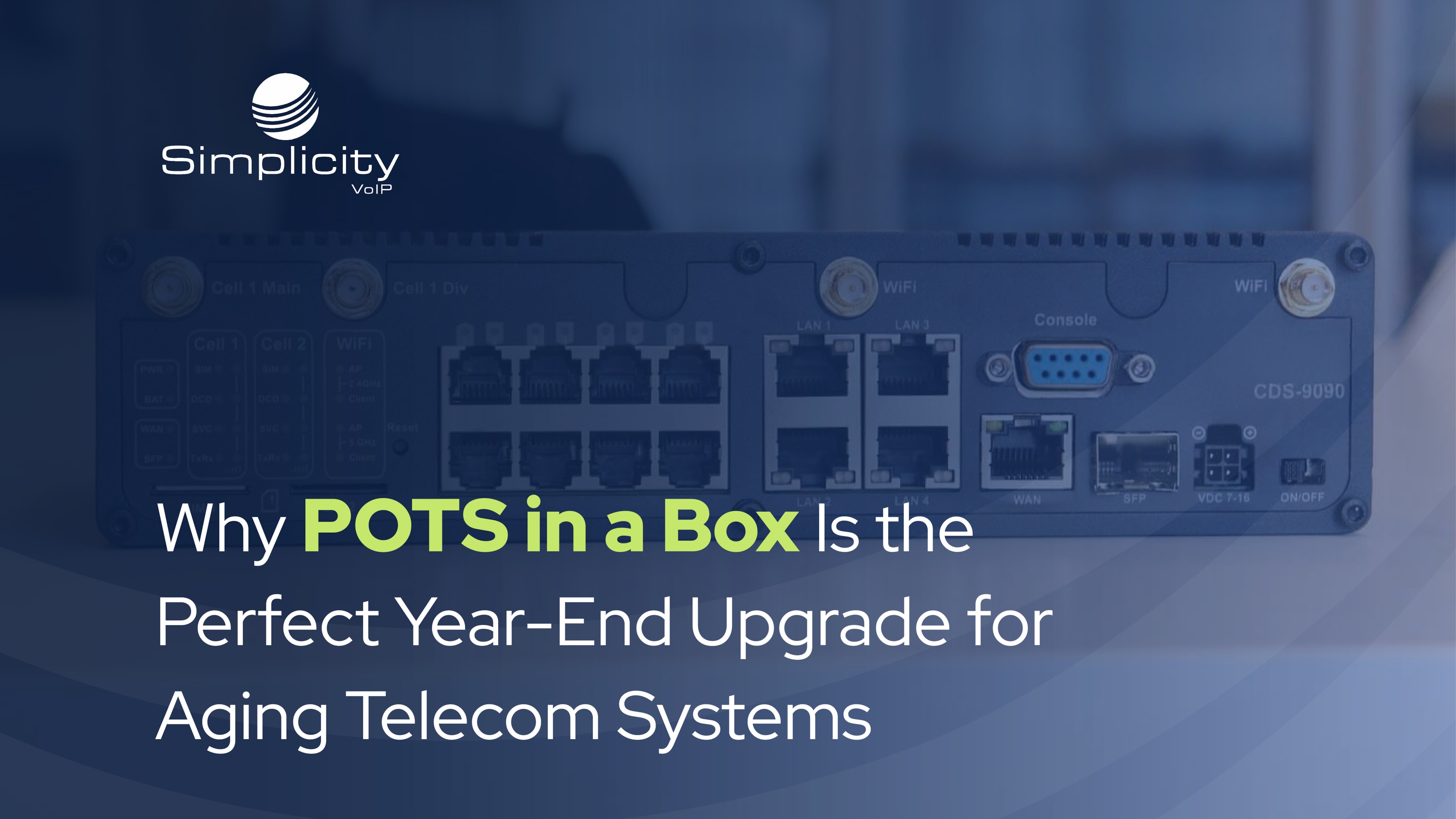

Retirement communities often modernize their main office communications while older connections continue operating quietly in the background. Fire alarm panels, elevator phones, fax machines, emergency lines, and security systems may still depend on traditional POTS service, while resident rooms and other areas may continue using familiar analog phones.
As carriers reduce support for aging copper infrastructure, these connections can become more expensive and less dependable. Communities need to determine which lines require POTS replacement and which analog devices can remain in service through an analog step-down strategy using ATA or FXS gateways.
A planned analog phone line replacement helps communities avoid rushed decisions, protect critical systems, and move toward modern alternatives without replacing everything at once.
POTS line replacement can sometimes even reduce costs by over 30 percent.
What's Happening to Traditional Analog Service?
Plain old telephone service, commonly called POTS, carries voice signals over copper wires connected to the public switched telephone network. For decades, this telephone network provided dependable voice lines and powered many specialized devices.
Today, providers are shifting toward internet protocol, cellular networks, wireless networks, and other digital solutions. Communities might encounter rising costs, restrictive service contracts, slower repairs, and more frequent service outages as POTS service becomes harder to support.
Copper retirement doesn't necessarily mean POTS lines disappear on one specific date. It means POTS lines are no longer the preferred foundation for modern phone services. Traditional phone lines might remain active, but they can become increasingly difficult and expensive to maintain.
For senior living organizations, this change matters because copper POTS lines support more than traditional landline phones. They may connect emergency communications, safety systems, operational equipment, and legacy devices.
Which Systems Still Use Analog Lines?
The first step in any POTS replacement project is identifying where analog lines remain. A retirement community phone system may already be cloud-based while specialty lines still serve equipment throughout the property.
Common examples include:
- Elevator phones and emergency call boxes
- Fire alarms and fire alarm panels
- Security and emergency alarms
- Emergency lines and emergency phones
- Fax machines
- Point-of-sale terminals and systems
- Building access controls
- Maintenance equipment
- Older desk phones
Not every analog connection requires the same modernization approach. Dedicated fire, elevator, security, or fax lines may be candidates for POTS replacement. Compatible resident or desk phones may instead remain in place through an analog step-down approach that connects them to a VoIP platform through ATA or FXS gateway technology.
Some point-of-sale equipment uses modem technology to transmit digital data. Certain alarm devices send an electrical signal through phone lines, while other systems transmit voice or coded information through connections designed for copper infrastructure.
Finding every line can be difficult, especially across multiple locations. Billing records may list telephone service without identifying the connected device. Never disconnect unknown POTS phone lines without tracing and testing them first. Rarely used connections might still be supporting mission critical systems.
How Should Communities Inventory Existing Equipment?
A complete inventory should connect every billed line to its physical location, purpose, and responsible department. Facilities, IT, operations, finance, safety, and administrative teams should all participate.
For each connection, document:
- The phone number
- The connected device
- The building and room
- The current provider
- Monthly charges
- Contract terms
- Compliance requirements
- Backup requirements
- The effect of an outage
- The vendor responsible for the device
This inventory provides a clear view of the existing infrastructure and may uncover duplicate, unused, or unnecessarily expensive services.
It also helps leadership distinguish routine voice connections from critical systems. Emergency services, elevator communications, fire alarm panels, and emergency response equipment should be reviewed before low-priority administrative lines.
A thorough assessment means POTS lines are considered as part of the full operating environment, not treated as a simple billing exercise.
What POTS Line Replacement Options Are Available?
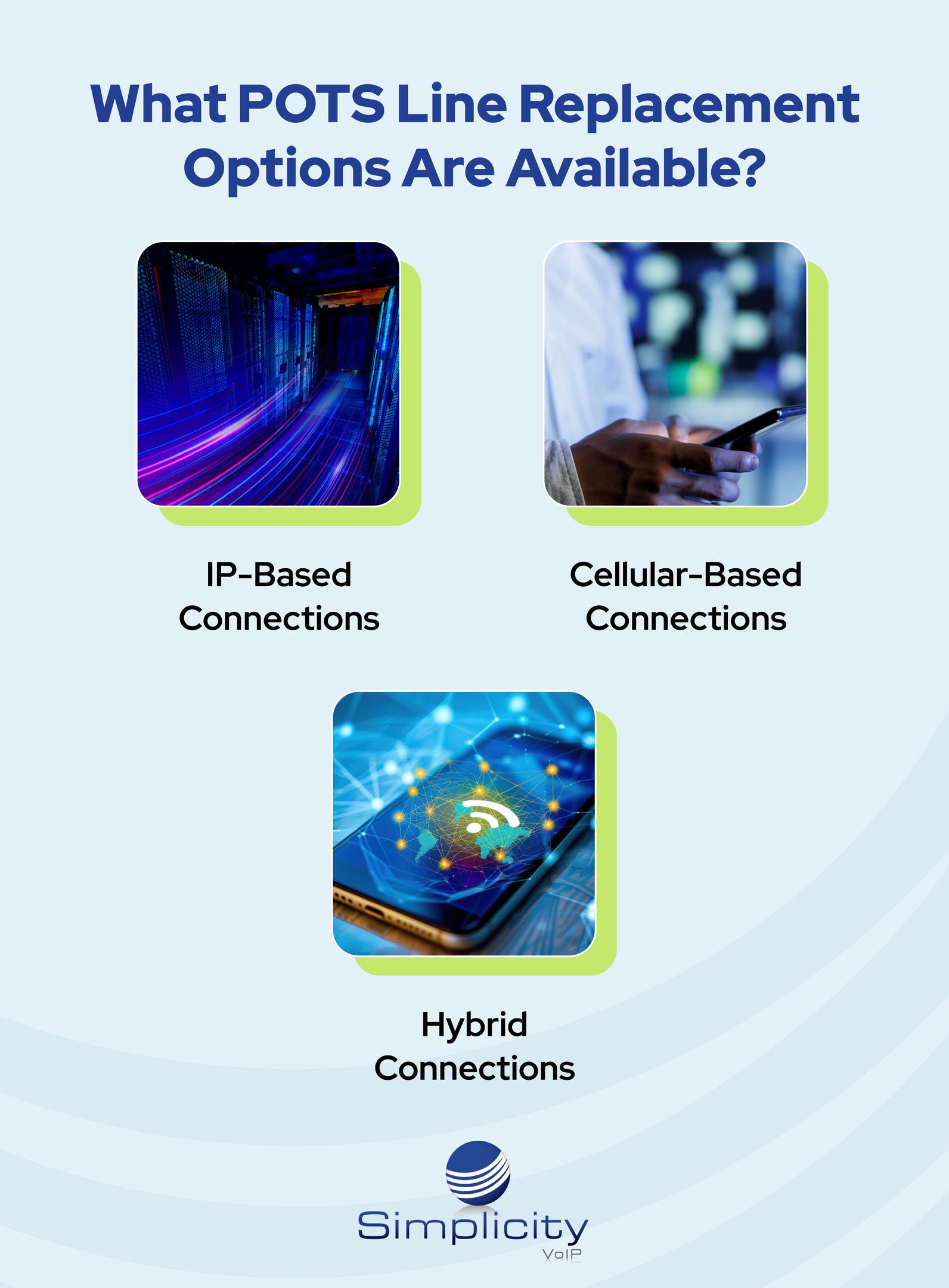
There's no single answer for every device. The right POTS line replacement option depends on signaling requirements, available connectivity, local rules, and the age of the existing equipment.
IP-Based Connections
An internet protocol service can convert analog signaling into digital data and carry it across a managed network. This approach may allow communities to keep existing equipment while moving away from copper lines.
A cloud-based solution can also simplify management across multiple locations through centralized monitoring, reporting, and support.
Cellular-Based Connections
Cellular-based solutions use cellular networks instead of a wired telephone network. When properly configured and tested, they can provide reliable connectivity for alarms, elevator phones, and other specialty lines.
Analog Step-Down Through ATA or FXS Gateways
Retirement communities with large numbers of existing analog phones may not need to replace every handset. An Analog Telephone Adapter or FXS gateway can convert analog phone signals into VoIP streams, allowing compatible phones to continue operating over modern IP-based service.
High-density gateways can support multiple analog phones from a single device, making this approach especially useful for resident rooms, common areas, and other locations where familiar analog phones still serve their purpose.
Hybrid Connections
Some modern solutions combine internet and cellular connectivity. Broadband may serve as the primary service while a cellular path provides failover during network interruptions.
The best line replacement plan may use several technologies. Office phone systems might move to the cloud, while fire alarms use dedicated cellular connectivity and emergency phones use an IP service with battery backup.
Can Communities Keep Their Existing Equipment?
In many cases, yes. Modernization does not automatically require every analog device or phone to be replaced.
For resident phones and other compatible analog endpoints, ATA or FXS gateways can provide an analog step-down path by converting the analog signal into VoIP. This allows communities to preserve familiar equipment while modernizing the service behind it.
Critical systems such as fire alarms, elevator phones, fax machines, and security devices should be evaluated separately because they may require a dedicated POTS line replacement or other purpose-built connectivity.
Managed gateways and adapters can allow legacy systems to connect through digital or cellular networks, protecting prior investments and reducing disruption. However, compatibility must be verified.
Some legacy devices require specific voltage, timing, tones, or electrical signal behavior. Fax machines, alarm panels, modems, and elevator phones, for example, may respond differently to converted service than standard desk phones.
Before choosing a provider, confirm that the proposed service has been tested with the exact make and model of the existing equipment. The installer may also need to coordinate with elevator contractors, alarm vendors, inspectors, or manufacturers.
Modernization should always preserve essential connectivity rather than create new uncertainty.
How Do You Protect Service During Power Outages?
Traditional copper lines often received power through the carrier network. Modern alternatives may rely on local electricity, internet access, or cellular equipment.
A replacement device should include a built-in battery backup or connect to a suitable external battery backup. When transitioning away from POTS, communities should understand how long backup power will operate and which devices will remain active during a power outage.
Reliable service may also require:
- Redundant internet connections
- Cellular failover
- Remote monitoring
- Automatic alerts
- Periodic battery testing
- Documented emergency procedures
A system that works during normal conditions might fail during a storm or building outage if continuity hasn't been planned. Business continuity depends on testing the primary connection, backup connection, and escalation process before the original line is removed.
What About Regulatory Compliance?
Safety-related equipment can be subject to regulatory compliance, inspections, fire codes, elevator rules, or local emergency communications standards. Changes to the connectivity supporting these systems may affect compliance requirements, which can vary by application and jurisdiction.
Before changing fire alarm panels, elevator phones, security alarms, or emergency call boxes, confirm which parties must approve the work. The device vendor, monitoring company, authority having jurisdiction, or local emergency services may need to participate.
Testing should confirm that calls and signals reach the correct destination, location details are accurate, and emergency response procedures function as intended. Document the test date, participants, results, and final approval.
How Can a Phased Plan Control Costs?
Replacing all copper POTS lines at once may be unnecessary. A phased plan allows communities to prioritize high-risk connections, spread investment across budget cycles, and reduce disruption.
A practical sequence could address:
- Critical POTS lines, including fire alarms, elevator phones, and emergency lines
- Security systems, fax lines, and other specialty devices
- Compatible resident and facility phones that can transition through analog step-down
- Administrative voice users who may benefit from SIP trunking, cloud phones, or full VoIP
- Broader communications modernization across the community
This approach creates cost savings by eliminating unused services, reducing rising costs, and avoiding emergency replacement work. It can also improve operational efficiency, consolidate vendors, and simplify management across buildings.
What Should You Ask a POTS Replacement Provider?
A qualified provider should act as a communications advisor, not simply sell a device.
Ask how the provider will:
- Locate and document analog lines
- Evaluate legacy devices
- Recommend replacement options
- Coordinate with equipment vendors
- Address power outages and service outages
- Provide a built-in battery backup
- Support multiple locations
- Monitor reliable connectivity
- Maintain emergency communications
- Assist with regulatory compliance
- Test every connection before cutover
- Determine which lines require POTS replacement
- Identify which analog phones can remain through ATA or FXS gateways
- Design an analog step-down strategy where appropriate
The provider should also explain how POTS line replacement fits into a broader business phone system upgrade. Some organizations might benefit from SIP trunking, while others may choose a fully cloud platform with advanced features for mobile devices, staff messaging, routing, and remote work. VoIP provides features like voicemail-to-email and call forwarding which are costly on analog lines.
The right strategy should improve phone system efficiency while helping employees stay connected.
Plan Before a Failure Forces the Decision
Copper retirement doesn't require retirement communities to replace everything immediately. It does require a clear understanding of where traditional analog phone lines remain and what they support.
By inventorying POTS lines, prioritizing critical systems, evaluating modern alternatives, and testing each connection, senior living leaders can build a practical plan around safety, cost, and operational needs.
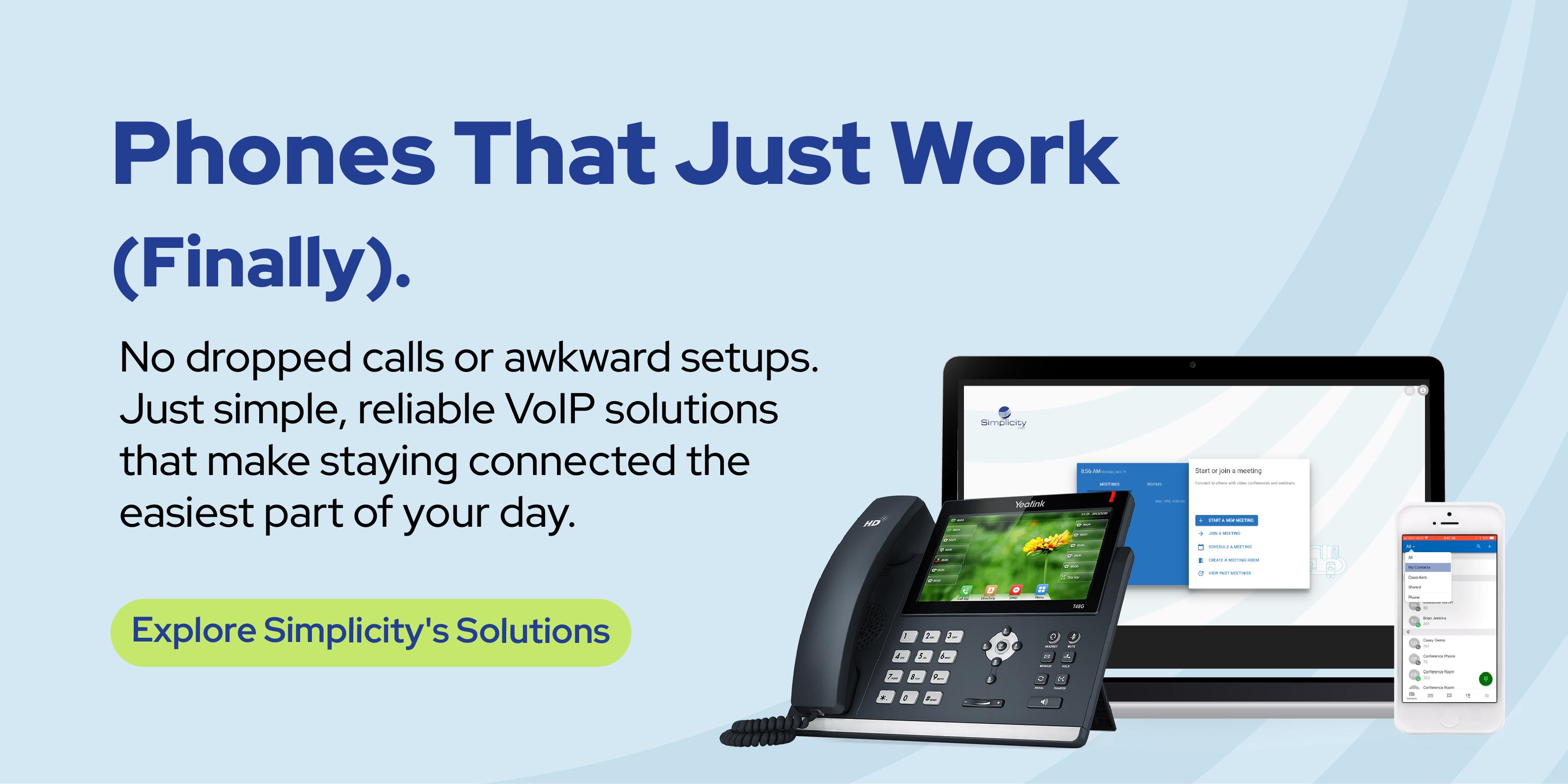
Simplicity VoIP helps organizations evaluate copper infrastructure, identify appropriate POTS replacement solutions, and transition in manageable phases. The goal is to preserve reliable service, support emergency response, and strengthen business continuity without overwhelming staff or budgets.
A well-planned modernization strategy can replace critical POTS lines where needed while preserving compatible analog phones through step-down technology, creating a stronger foundation for tomorrow’s senior living communication systems.
Request a Consult to begin reviewing your phone lines and building a phased modernization plan.