

Customers, residents, families, and staff don't always have time for phone calls. Emails get buried. Voicemails are easy to miss. A clear text can often move the conversation forward faster.
That's why business SMS has become a practical part of modern communication. It helps organizations send messages, answer questions, and keep people informed across multiple communication channels. For senior living, healthcare, service businesses, and any small business trying to stay responsive, business text messaging can reduce friction without replacing the personal touch.
Used well, text messaging is not just another inbox. It's a simple way to improve customer relationships, support internal communications, and help teams stay on the same page.
What Is Business SMS?
Business SMS allows an organization to send and receive SMS messages through a business phone number instead of an employee’s personal phone number or cell phone. A business texting service gives teams a more professional way to manage conversations, store conversation history, and coordinate responses across multiple team members.
A texting platform can support one-on-one conversations, group chat, appointment reminders, automated messages, scheduled messages, delivery notifications, payment confirmations, security alerts, and customer feedback requests. Some business texting platforms also include MMS messaging for multimedia messages, image sharing, audio files, message templates, and automated responses.
The goal isn't to send more messages. The goal is to communicate better.
How Does Business Text Messaging Work?
How does business text messaging work? In most cases, a business uses a messaging platform, messaging app, or SMS service connected to a business phone number. The system receives incoming messages, lets staff reply from the same app, and connects with other tools such as CRM systems, marketing tools, calendars, or help desk software.
Behind the scenes, an SMS gateway helps route messages between the business and mobile carriers. Some providers also support toll-free numbers, local numbers, or existing business lines. More advanced features may include automated workflows, routing rules, text conversations assigned to team members, and reporting that helps leaders understand volume and response times.
For teams that also rely on voice calls, unlimited calling, and missed call workflows, texting can become a useful add-on to the phone system instead of a separate process.
Business SMS Use Cases
Business texting can support many everyday needs. A senior living community might use appointment reminders for tours, family meetings, care conferences, or maintenance visits. Front desk teams can confirm office details, share non-emergency updates, or route questions to the right person. Facilities teams can send targeted messages about service windows or access changes. Administrators can use internal communications to coordinate staff without creating another long email thread.
Across other industries, business messaging can help with delivery notifications, payment confirmations, customer feedback, prospective customers, office reminders, and follow-ups after missed calls. A service company can focus on texting clients when a technician is on the way.
A healthcare office may confirm appointments.
A retailer may provide order updates.
A professional firm may use text-only messages for quick reminders and MMS messaging for helpful documents or images.
In each case, business text messaging services help teams communicate quickly while keeping the organization in control of the customer experience.
Business SMS vs. SMS Marketing
Business SMS is broader than SMS marketing.
SMS marketing campaigns are usually designed to promote offers, events, reminders, or announcements to a defined audience. It's highly beneficial because automated SMS campaigns can improve marketing ROI significantly.
A text message marketing platform may support mass text messaging, website pop-ups, unlimited contacts, segmentation, and targeted messages.
SMS messages have an average response rate of 35%.
That can be useful, but not every message should be promotional. Many businesses need a texting service for service updates, scheduling, customer care, and daily operations.
The best SMS services help separate marketing, support, and operational communications so customers receive relevant information, not unwanted messages. Personalization in SMS can lead to improved conversion rates.
Before using SMS marketing, organizations should review consent, opt-out requirements, and applicable rules such as the Telephone Consumer Protection Act with qualified counsel. Clear expectations protect customers and help the business maintain trust. Violating SMS guidelines can lead to suspended numbers or penalties.
Best Practices for Business Text Messaging
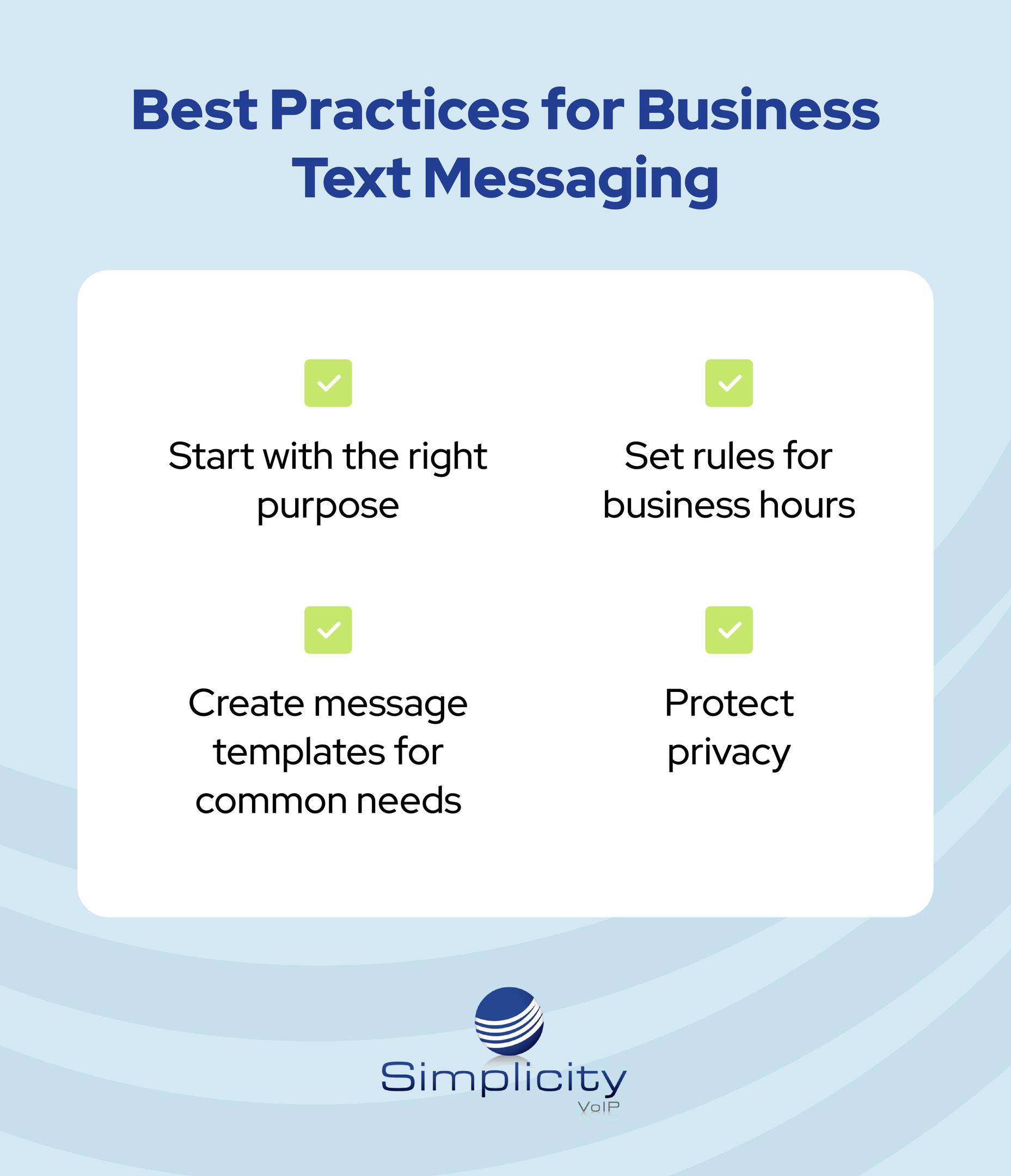
Start with the right purpose
Business texting should make communication easier, not noisier. Use it for short updates, reminders, simple questions, and time-sensitive details. Save complex or sensitive topics for voice calls or more secure communication channels.
Set rules for business hours
Decide when staff will respond, what automated responses should say after hours, and when a text should become a phone call. If a resident’s family member asks a detailed question, for example, a quick text can acknowledge the message while a staff member follows up personally.
Create message templates for common needs such as appointment reminders, arrival updates, payment confirmations, security alerts, or office closings.
Good templates save time and reduce errors, but they should still sound human. Train employees on when to use templates, when to personalize, and when to escalate.
Protect privacy
Senior living and healthcare teams should be careful with personal or medical details. Keep messages clear, limited, and appropriate for the channel.
What to Look for in a Business Texting Service
The right business texting apps should match how your team already works. Look for texting features that help staff manage conversations, assign incoming messages, and see conversation history. Teams may also need message templates, scheduled messages, automated workflows, MMS messaging, reporting, and the ability for multiple team members to work from the same app.
If marketing is part of the plan, ask whether the provider supports SMS marketing campaigns, segmentation, website pop-ups, and other marketing tools. If operations are the priority, focus on reliability, usability, routing, notifications, and integration with your phone system.
The right provider should also help explain how texting fits with phone calls, business messaging, rich communication services, and future communication channels. A basic plan may be enough to start texting, while more advanced features can be added as needs grow.
Why Business SMS Matters for Senior Living
In senior living, communication builds confidence. Residents need clear updates. Families and loved ones want timely answers. Staff need efficient ways to coordinate. Leaders need visibility into what's happening across the community.
Business text messaging helps support that flow. It can help teams respond to routine questions, reduce missed calls, confirm important details, and improve follow-through. It can also help prospective customers and families stay engaged during the decision process.
Most importantly, texting should support human service, not replace it. When simple updates are handled efficiently, employees have more time for the conversations that require empathy, judgment, and care.
FAQ: Business SMS
Is business SMS only for marketing?
No. Business SMS can support appointment reminders, service updates, internal communications, customer care, and mass messaging for SMS campaigns when appropriate. Over 50% of consumers prefer texting for customer service inquiries and SMS reminders reduce no-show rates for appointments.
Can a team use one phone number for texting?
Yes. Many messaging services allow multiple team members to use one business phone number, which helps avoid personal cell phone texting and keeps the conversation history visible.
Can SMS include images?
Yes. Depending on the platform, MMS messaging may support images, audio files, and other content beyond text-only messages.
What is the best way to start?
Start texting with the most common, low-risk use cases first: reminders, confirmations, missed calls follow-ups, and simple customer questions.
Make Communication Easier

Business SMS gives businesses a practical way to improve responsiveness, customer engagement, and daily coordination with 98% of SMS messages being opened by recipients and 95% of SMS messages are read within three minutes of delivery. Simplicity VoIP can help you evaluate the right business texting service and build a communication strategy that fits your team.
Ready to see what is possible? Request a Quote


.jpg?width=352&name=scott-graham-5fNmWej4tAA-unsplash%20(1).jpg)