
If your building still has copper phone lines running to elevator phones, entry gates, fax machines, or monitoring panels, you've probably noticed those lines getting harder (and pricier) to keep. Carriers continue to phase out copper lines, and repairs aren't as quick as they used to be.
The good news? You don't have to rip out every device to move forward. POTS over LTE is one of the most common ways to replace those lines while keeping supported equipment in place. This blog walks through how it works, what it supports, and what to look for before you switch.
What Is POTS Over LTE?
POTS over LTE is a POTS line replacement that carries analog lines over 4G or 5G cellular networks instead of copper wires. LTE stands for Long-Term Evolution, the wireless standard behind most 4G service.
POTS stands for plain old telephone service. For decades, traditional POTS lines ran over the public switched telephone network on copper infrastructure. Carriers are now retiring copper infrastructure across the country, and traditional POTS lines are getting more expensive to keep. Under FCC rules, an incumbent carrier only has to give 90 days' direct notice before a planned copper retirement. That's not a lot of time to sort out critical systems.
With POTS over LTE, you can keep legacy analog systems without rewiring the building.
How Does a POTS to Cellular Converter Work?
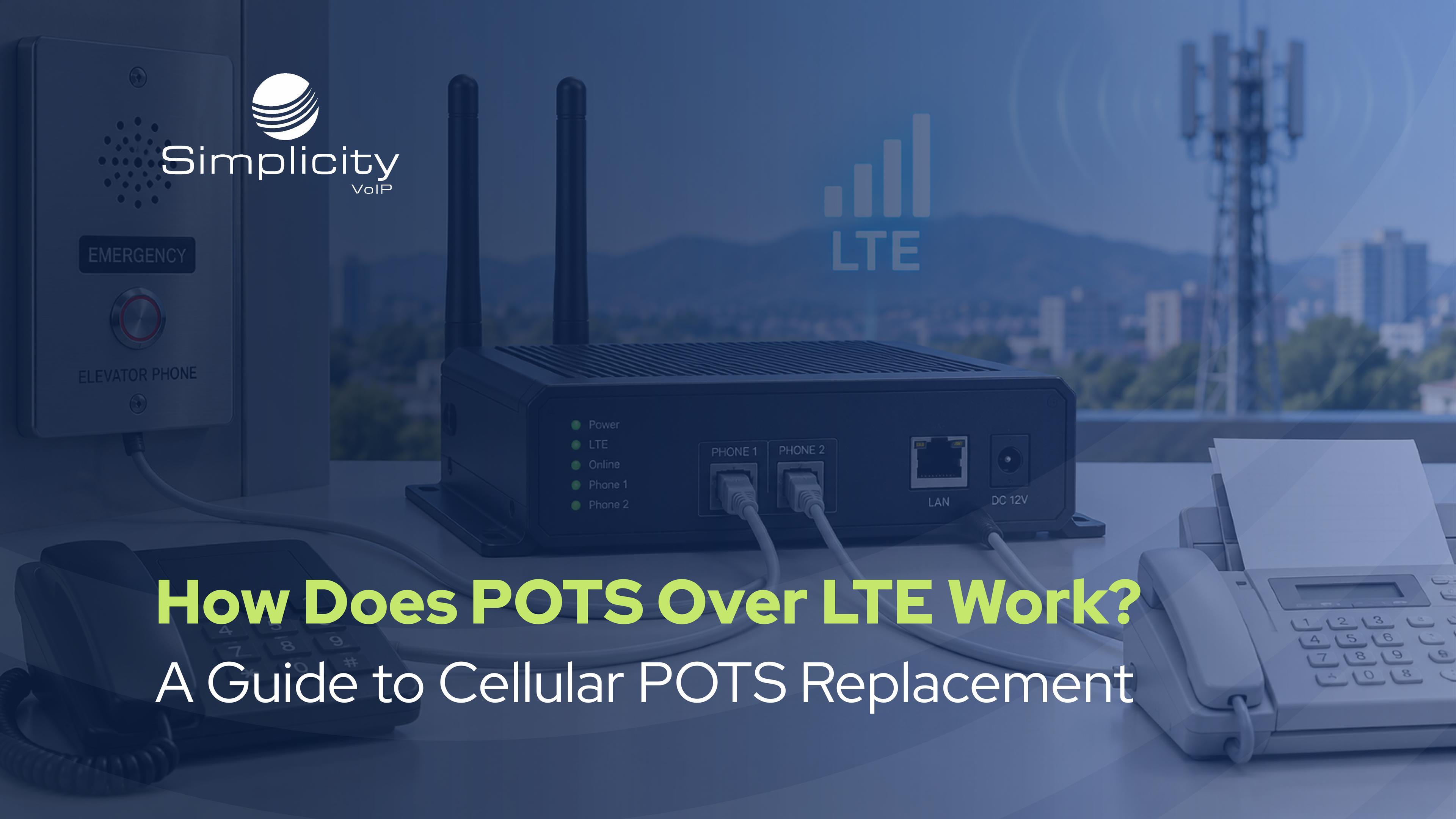
A POTS to cellular converter, also called a cellular gateway or POTS modem, sits between your analog devices and the network.
Here's how it works:
- Your device plugs into the gateway's RJ-11 port, the same jack it used for the old phone line.
- The gateway provides a dial tone, so the device acts like it's on a normal line.
- When the device makes a call, the gateway converts analog signals into voice data and data packets using Internet Protocol.
- Those voice signals travel over a cellular signal or a wired internet connection to the carrier.
As far as the device is concerned, nothing has changed.
What Equipment Can Work With POTS Over LTE?
LTE POTS adapters work with existing analog devices that use standard RJ-11 connections.
Common examples:
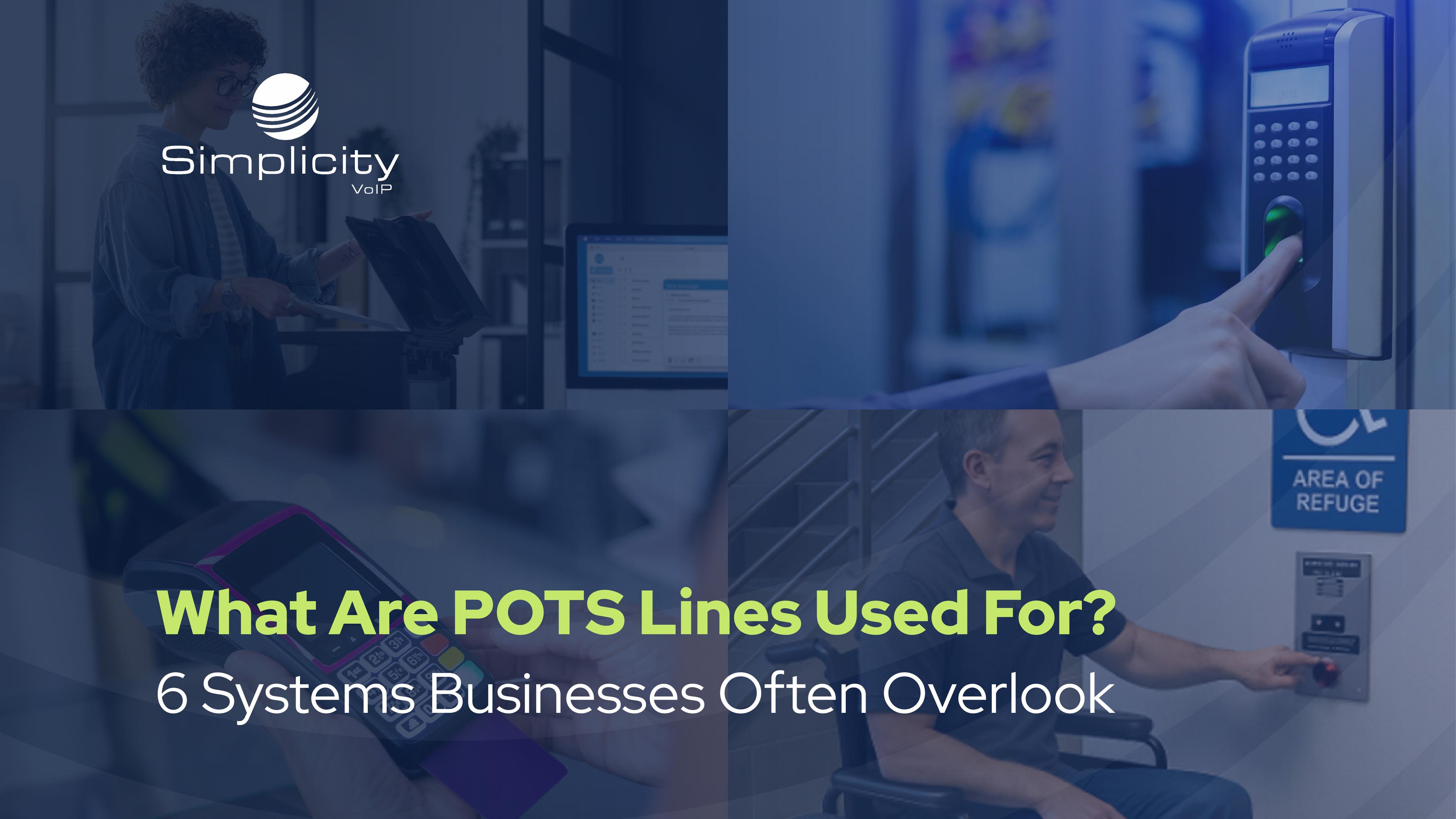
- Elevator emergency phones and emergency call boxes
- Gate and door entry systems
- Fax machines on a dedicated fax line
- Alarm panels and monitoring equipment
- Modems and point-of-sale terminals
Keeping supported devices can help you avoid hardware replacement costs. Each elevator phone still needs to meet code. Washington State's elevator program, quoting ASME A17.1, notes that elevators need a two-way communication means to a location staffed by authorized personnel, and that the line serving it must be monitored. The same guidance discusses wireless (cellular) systems in elevators, so check with your local inspector before you switch.
Not every device fits every gateway. That's why a line assessment comes first.
What Happens If the Internet or Power Goes Out?
This is a big one. It's the first question most people ask about any cellular solution, and a good setup plans for it.
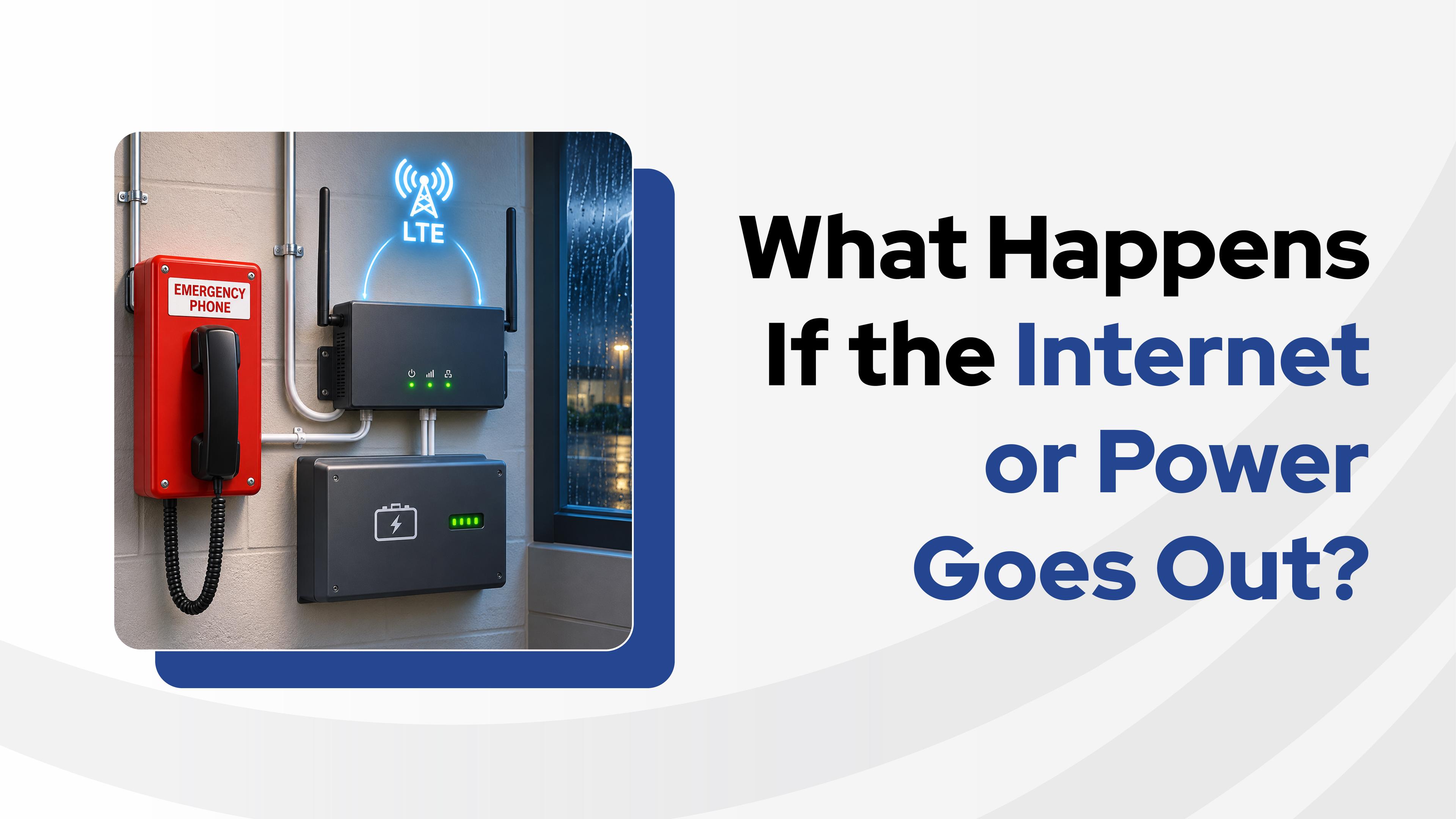
- Battery backup. Modern units often include battery backup to keep working during a power outage.
- Carrier failover. Cellular POTS replacements can include multi-carrier SIMs for network redundancy, so if one carrier has trouble, the device switches to another, like T-Mobile or a different network with better LTE coverage at your site.
- Two paths. Some systems use wired internet as the primary path and cellular as backup, or the other way around.
That mix supports business continuity and helps keep uninterrupted service for emergency communications and life safety equipment. When someone presses an emergency button, the call needs to reach a person who can coordinate the emergency response and contact first responders.
Is a POTS Modem or Converter the Same as VoIP?
Not quite. VoIP is designed for people making voice calls on desk phones, softphones, and mobile apps, and it can run over any internet connection, including Wi-Fi. VoIP may struggle with call quality during internet congestion, though, and many analog devices don't work well on a basic VoIP adapter.
A POTS line-to-VoIP converter or cellular gateway is built for equipment. It focuses on analog signaling, backup power, and reliable connections for mission-critical applications, not advanced features like video meetings.
Many organizations use both: VoIP for staff, and POTS replacement solutions for machines. Some providers manage both on one network, which can simplify billing and support.
What Should You Look for in a Cellular POTS Replacement Solution?
Before replacing POTS lines, check these:
- How many POTS lines you have. Count lines and ports per location, including spares and new lines you'll need soon.
- Signal strength. Test the cellular signal where the device will sit, like a basement elevator room.
- Battery backup. Know how long the unit runs on battery.
- Carrier failover. Ask whether it switches carriers automatically.
- Protocol support. Fax and alarm equipment may need specific protocols.
- Remote management. Many LTE devices offer remote monitoring and diagnostics, which can cut truck rolls and support enhanced security.
- Location data. Make sure each emergency device sends the right address and location data.
A good partner will also plan around your current infrastructure, so the move is a seamless transition for your team.
How Does Simplicity POTS Replacement Handle POTS Over LTE?
Simplicity POTS Replacement uses Vola hardware: the PRI2 Lite 4G for 2-port sites and the PRI8 5G for up to 8 lines. Each unit pairs a primary internet connection with wireless backup and a multicarrier SIM that switches automatically. Battery support runs up to 24 hours. The devices support Contact ID, T.37, T.38, and V.150.1 for alarm, fax, and data equipment.
Our team guides you from planning through installation, whether you have one site or multiple locations.
Is POTS Over LTE Worth It?
For most businesses, yes. A cost-effective cellular option can bring real cost savings over legacy POTS service, faster setup than new copper, and future-proofing as copper networks shrink. The key is matching each device to the right setup.
Not sure which of your communications systems are ready to make the move? Simplicity VoIP can start with a line assessment and help you build a practical plan from there. Ready to see what's possible? Request a Quote