
Remote work didn’t just change where people sit; it changed how teams communicate. And for a lot of businesses, that exposed a problem: their phone system was built for a single office, not a distributed workforce.
That’s where a virtual phone system comes in.
Instead of tying your business communication to a desk or location, a virtual setup lets your team stay connected wherever work happens: home offices, coworking spaces, airports, or across time zones.
If, like 64 percent of businesses, you’re running a remote or hybrid team (or planning to), here’s what you need to know.
What Is a Virtual Phone System?
A virtual phone system is a cloud-based phone system that allows your team to make and receive phone calls using an internet connection instead of traditional on-premise infrastructure.
This type of phone system uses internet protocol (IP) technology to deliver reliable voice calls, messaging, and collaboration tools through a unified communications platform.
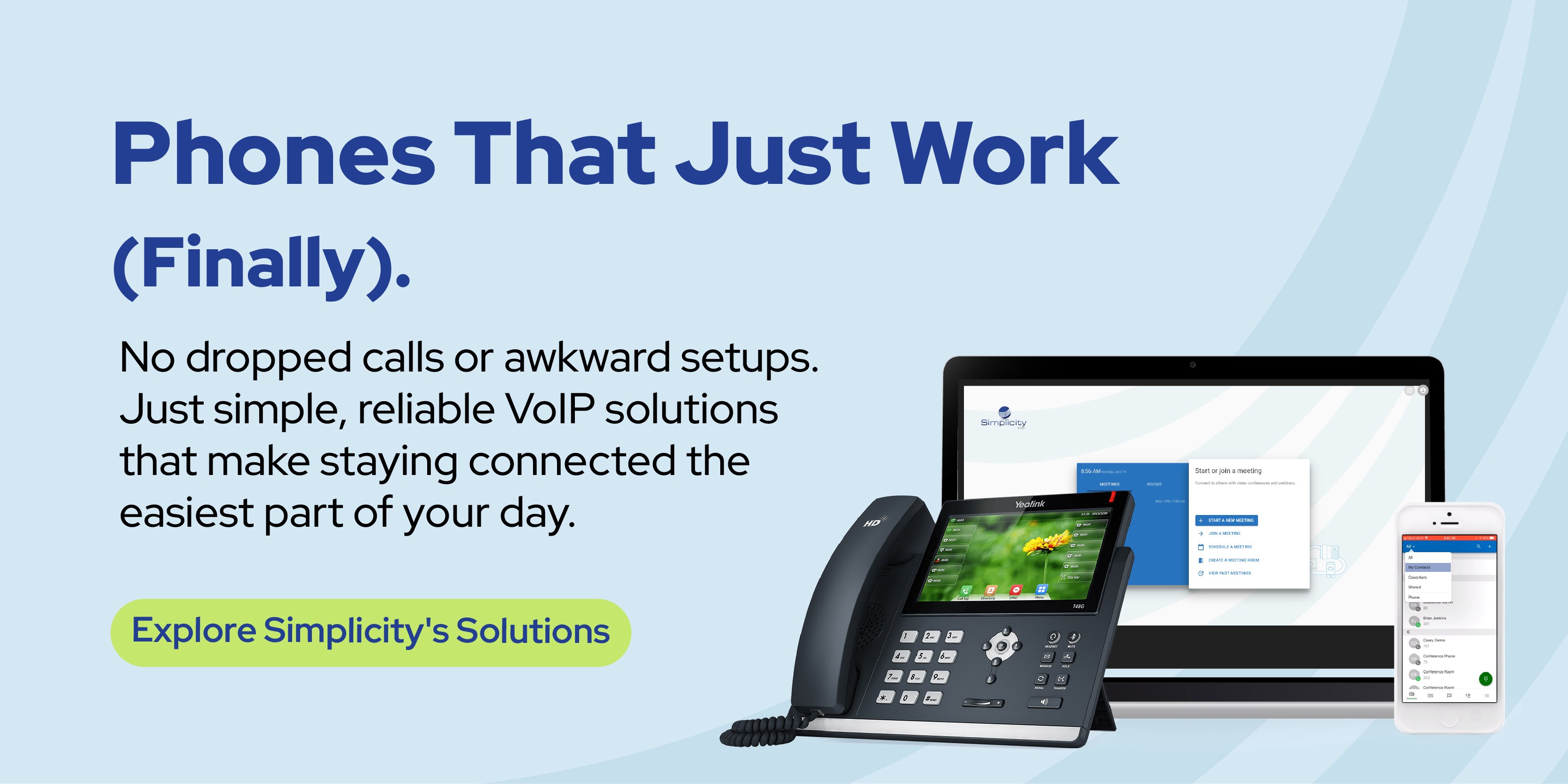
Instead of relying on desk phones or complex hardware, a virtual phone system gives your team access to a virtual phone number you can use from a mobile device, laptop, or browser. Whether they’re using VoIP (Voice over Internet Protocol) desk phones, mobile apps, or their own devices, they can stay connected without being tied to one location.
At its core, this is a modern VoIP phone system and hosted PBX model, where your service provider manages everything in the cloud. That means fewer headaches for IT and more flexibility for your team.
Why Traditional Phone Systems Fall Short for Remote Teams
A traditional business phone system was built for offices, not distributed teams.
With an on-premise phone system, you run into issues quickly:
- Incoming calls go unanswered when no one is at a desk
- Employees rely on cell phones instead of a business phone
- Managing call volumes becomes harder across locations
- Scaling requires hardware, not just adding multiple users
Even basic features like call transfer, caller ID, or call management can become complicated when your phone system is designed with the flexibility of an anvil.
A virtual phone system removes those limitations and replaces them with something far more adaptable.
How a Virtual Phone System Supports Remote and Distributed Workforces
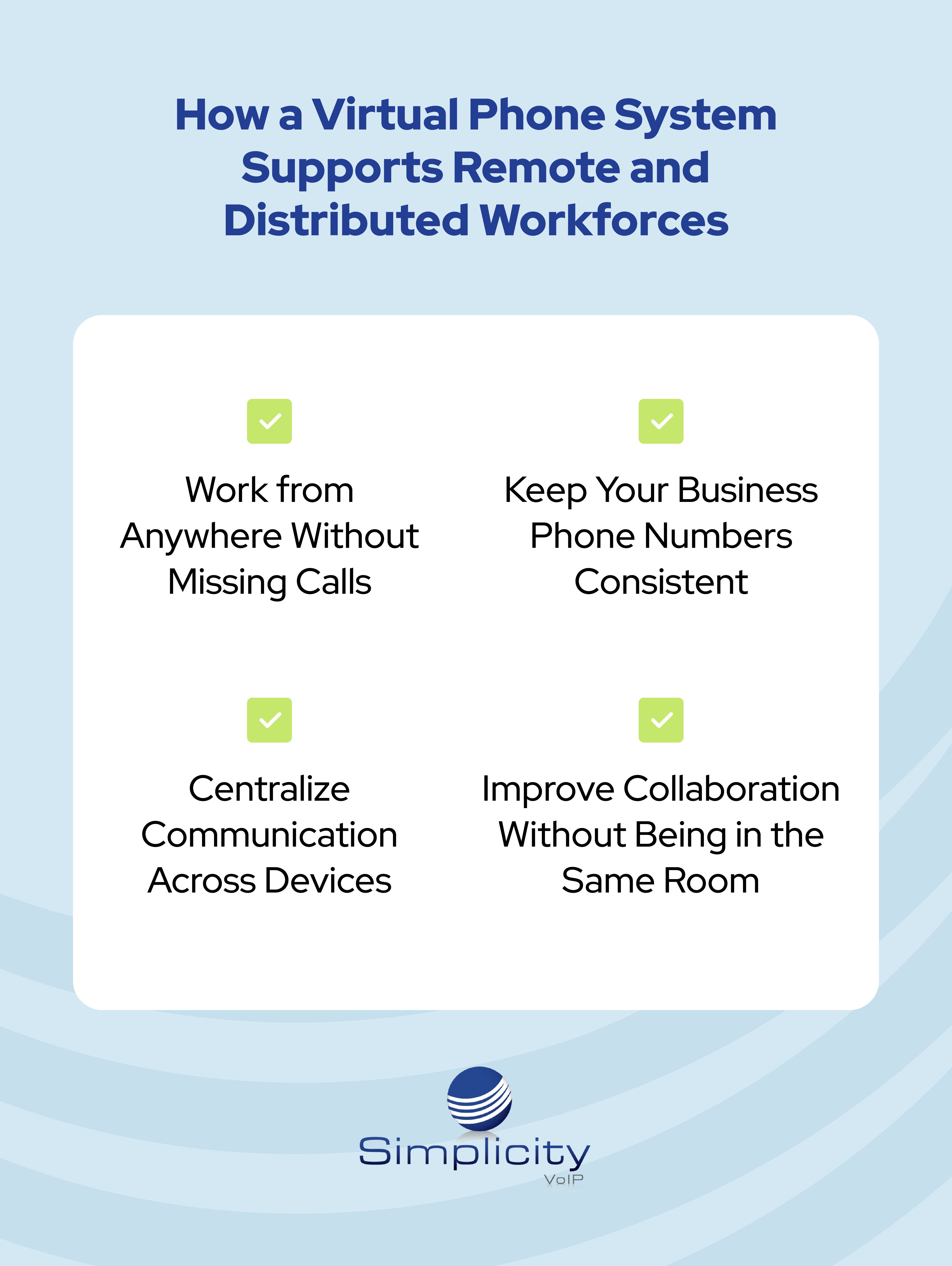
A VoIP phone system is built for how teams actually work today: across locations, devices, and communication channels.
1. Work from Anywhere Without Missing Calls
With a virtual phone, your team can receive and manage calls from anywhere.
- A sales team member can take outbound calls from home
- Support staff can receive phone calls through call queues
- Managers can monitor activity while traveling
Because the virtual phone system isn’t tied to a physical office, phone calls follow the user, not the desk.
This is where tools like Simplicity VoIP’s webphone and mobile apps come in. Your team can log in and instantly access their full phone service without needing desk phones.
2. Keep Your Business Phone Numbers Consistent
A cloud phone system allows you to keep your existing business phone number while adding new business phone numbers or even virtual phone numbers as you grow.
You can:
- Maintain a toll free number for customers
- Add local phone numbers in new regions
- Support domestic and international calling
This makes expansion easier for small business teams and medium-sized businesses alike.
3. Centralize Communication Across Devices
A virtual phone system brings all your business communications into one place.
Instead of juggling tools, your team can manage:
- Inbound and outbound calls
- Team messaging and instant messaging
- Team chat and communication channels
- Voicemail transcription and voicemail transcripts
This type of cloud communications solution helps improve response times and keeps everyone aligned.
4. Improve Collaboration Without Being in the Same Room
A modern cloud phone system supports collaboration across multiple devices.
Teams can:
- Route calls using smart call routing
- Use auto attendants to direct incoming calls
- Transfer calls instantly between team members
- Manage call queues within a contact center environment
Some businesses also integrate video conferencing, similar to tools like Zoom Workplace or Zoom Phone, to keep communication seamless.
Productivity Benefits of a Virtual Phone System
A virtual phone system helps remote teams stay productive without overcomplicating workflows.
Faster Response Times
With features like call forwarding, instant text response, and domestic SMS, your team can respond quickly to incoming calls and messages.
Fewer Missed Opportunities
With unlimited VoIP and unlimited domestic calling, your team is always reachable, whether they’re using a mobile device or VoIP phone.
Simplified Workflows
A virtual phone system combines essential features like call recording, call summaries, and basic features into one platform, reducing tool overload.
Better Visibility for Managers
Leaders can track call volumes, monitor customer experience tools, and improve customer satisfaction without being in the same office.
Flexibility That Matches How Modern Teams Work
A remote business phone system adapts to your team, not the other way around.
Hybrid Work Made Simple
Employees can move between home and office while keeping the same business phone experience.
Easy Onboarding for New Users
Adding multiple users is simple. You don’t need new hardware; just assign access and they’re ready to go.
Scale Without Limits
Whether you’re handling higher call volumes or expanding into new regions, a cloud phone system makes scaling easy.
Cost Savings of a Virtual Phone System
Switching from an on-premise phone system to a cloud phone setup delivers real cost savings.
- No expensive hardware or maintenance
- Predictable monthly pricing from your VoIP providers
- Lower upfront investment
For many businesses, this makes a virtual phone system one of the most practical phone system options available.
Real-World Example: A Distributed Team in Action
Imagine a growing business with:
- A remote sales team
- A support contact center handling inbound calls
- Leadership managing business operations across locations
With a virtual phone system:
- Calls are routed efficiently
- Support teams manage call queues without delays
- Employees use their own devices or VoIP desk phones
Customers experience fast, reliable service, no matter where your team members are located.
Virtual Phone Systems vs. On-premise Systems
The difference between a virtual phone system and an on-premise setup comes down to flexibility.
An on-premise phone system relies on physical hardware and limits mobility. A cloud phone system removes those barriers, giving your team access anywhere with an internet connection.
That’s why more businesses are moving toward cloud communications solutions.
Stats show that businesses using cloud communications grow 26 percent faster and are 21 percent more profitable.
Choosing the Right Virtual Phone System
When evaluating a service provider, look for:
- Important features, but also more advanced features where needed
- Reliable call management and call forwarding
- Support for video conferencing and team chat
- Strong integration with tools like Zoom Phone or GoTo Connect alternatives
Some providers offer Zoom Phone plans or GoTo Connect solutions, but the key is finding a system that fits your business, not forcing your team to adapt.
How Simplicity VoIP Supports Remote Teams
Simplicity VoIP delivers a virtual phone system designed for real-world use.
With Simplicity VoIP, businesses get:
- A flexible virtual phone system built for remote teams
- Reliable cloud phone and cloud phone system performance
- Support for business phone numbers, call routing, and communication tools
It’s everything you need, without unnecessary complexity.
A Virtual Phone System Isn’t Just Another Upgrade
It’s a better way to handle business communications.
With the ability to receive calls, manage calls, and stay connected across multiple devices, your team can work from anywhere without missing a beat.
As remote and hybrid work continue to grow, businesses that adopt a virtual phone system will have a clear advantage: more flexibility, better collaboration, and stronger customer experiences.
And that’s what modern communication should look like.
Request an easy consultation if you're ready to modernize.