

Your phone system shouldn't feel like a tax on doing business.
Yet for a lot of companies still using traditional phone systems, that’s exactly what their phone system is: a painful, recurring expense that never seems to give much back. The bill climbs, features stay dated, and it can take three different workarounds just to get one customer where they need to go. Add hybrid work or multiple offices into the mix, and the “tax” only grows.
A VoIP phone system offers another path. It simplifies the setup, follows the team wherever they work, and puts call routing under one clear set of controls.
Let’s break down what VoIP is, what it costs, and when it makes sense to make the switch.
VoIP 101: What a VoIP Phone System Is (And How It Works)
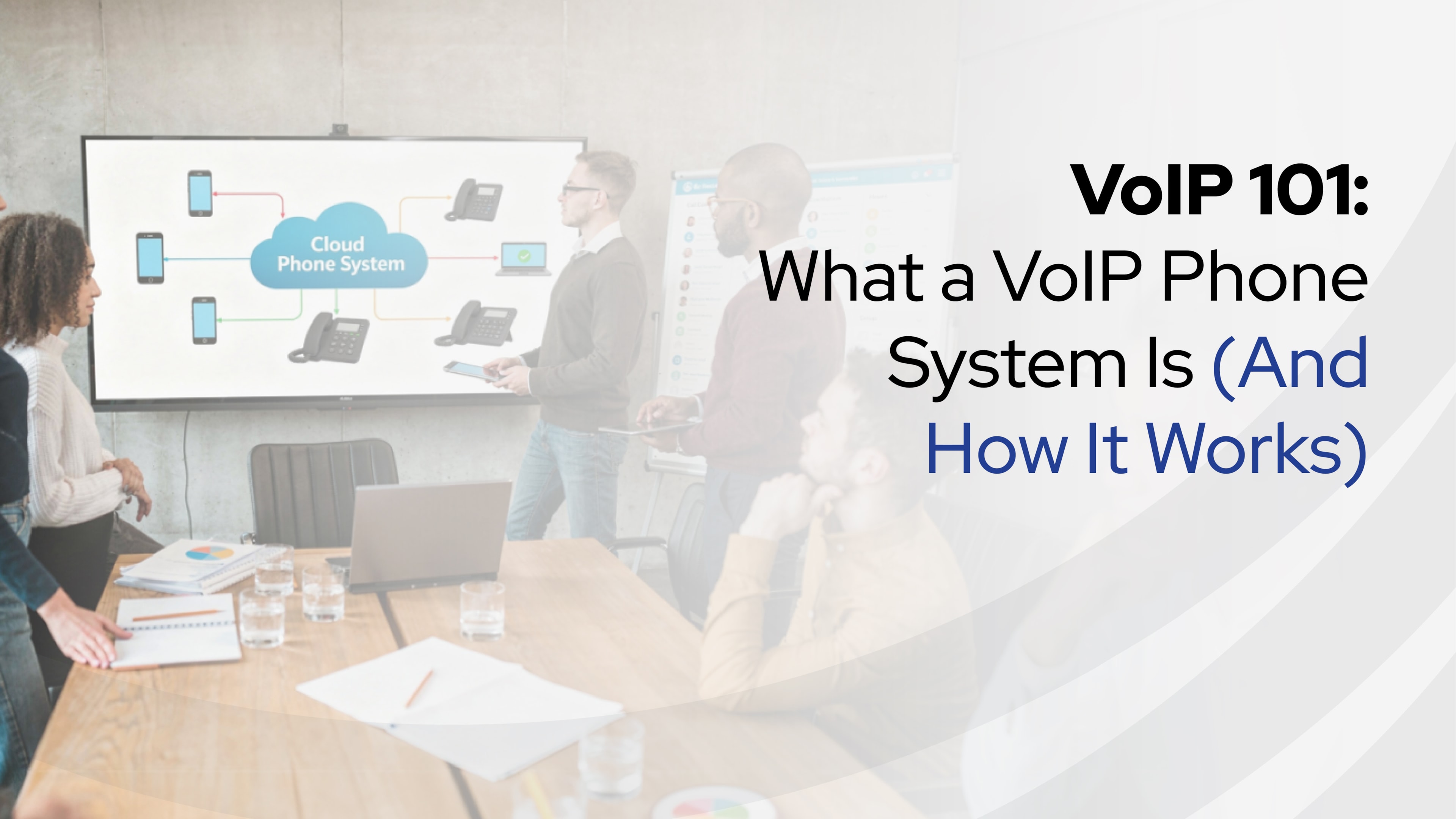
A VoIP (Voice over Internet Protocol) phone system uses your business's internet connection to make and receive calls instead of traditional copper phone lines.
Here is what happens in plain terms:
-
A call is placed from a desk phone, computer, or mobile app.
-
The voice is turned into small digital “packets” of data (similar to how video calls or streaming works).
-
Those packets travel over the internet to reach the other caller.
-
The system handles call forwarding, voicemail, menus, and other call rules through a cloud platform that resides in secure data centers rather than in a physical phone box in a closet.
That is why VoIP is often called a cloud phone system or hosted PBX. The provider hosts and maintains the platform, while the business simply uses it as a service.
Compared to legacy PSTN or PRI circuits:
-
There is no need for separate voice circuits from the phone company
-
Capacity is easier to adjust as staff counts change
-
Features are updated in the cloud rather than through on-site hardware upgrades
In short, VoIP takes the concept of a phone system and moves it into the cloud so it can support how modern teams actually work.
The 4 Biggest Benefits of a Business VoIP Phone System
Most teams consider VoIP because they want lower costs. They stay with VoIP because it makes everyday communication easier.
Here are some of the hosted VoIP benefits that matter most for small to mid-sized businesses.
1) More predictable monthly spend
A business VoIP phone system is usually priced per user, per month. That turns phone service into a clear operating expense instead of a collection of line charges, add-ons, and “mystery fees.”
A helpful way to think about it: VoIP pricing is usually tied to people and features, not physical lines in a building.
2) Mobility that actually works
VoIP makes it possible for a business phone number to follow the user across devices, without turning the phone system into a maze.
Common setups include:
-
Desk phone in the office + mobile app for on the go
-
Softphone (computer calling) for remote employees
-
Ring groups so teams can answer calls from multiple locations
Calls can still show a consistent business caller ID, which keeps personal numbers private and keeps the company looking professional.
3) Cloud phone system features built in
A VoIP platform can replace a stack of separate “phone add-ons” with one set of tools. The most common cloud phone system features include:
-
Auto attendant: a phone menu that routes callers (“Press 1 for Sales…”)
-
Voicemail to email: voicemail messages delivered to an inbox for faster response
-
Ring groups and call routing: rules that send calls to the right people
-
Call queues: callers wait in line with hold messaging instead of bouncing to voicemail
-
User and extension management: add, remove, or change users without rewiring anything
Simplicity VoIP also supports modern communication needs beyond voice, including Chat & SMS for businesses that want professional texting as part of the same communication strategy.
4) Scalability without a rebuild
With VoIP, growth is not a “rip and replace” project. Adding users is typically as simple as:
-
turning on another user license
-
assigning an extension
-
provisioning a phone or app
Opening a second location does not require a second phone system. It usually requires a plan for connectivity and a clean call flow that routes customers correctly.
A VoIP phone system isn’t just about cool features, though. It’s about solving real, everyday challenges that traditional phone systems can’t keep up with.
Where VoIP Makes the Biggest Difference in Your Daily Life

Here’s how businesses are using Simplicity VoIP solutions to simplify operations, improve service, and stay flexible in the face of change.
For Hybrid and Remote Teams? You Can Stay Connected Anywhere
Your team might be in the office on Monday, working from home on Tuesday, and visiting a client site on Wednesday. With VoIP, they’re never out of reach.
How VoIP helps:
-
Everyone keeps one business number that rings wherever they are
-
Calls can ring to multiple devices (desk phone, mobile, laptop) at once.
-
Managers can update call routing in minutes when schedules shift
Whether you're formalizing remote work policies or just need flexibility, VoIP makes it easy to keep communication consistent.
→ See how real businesses are using VoIP to keep remote teams reachable, productive, and professional.
For Multi-Site Offices? You Get One System and United Teams
Running two or more locations shouldn’t mean doubling your phone headaches. VoIP brings every location together under one seamless system, so it feels like one company, not a patchwork.
How VoIP helps:
-
One auto attendant greets and routes every call to the right team
-
Extensions work across locations without complicated dialing
-
If one office is busy, calls can automatically overflow to another office
It’s one of the top reasons businesses move away from PSTN or PRI setups. The phone no longer lives in the building. It lives in the cloud, right where you need it.
For Customer Service Teams? You Get Fewer Missed Calls and Happier Customers
When call volume spikes, the last thing you want is for customers to hit voicemail or give up. VoIP gives support teams the tools to manage more calls without missing a beat.
How VoIP helps:
-
Call queues keep incoming calls organized and reduce wait times
-
Smart ring strategies help distribute calls across your team
-
Skill-based routing sends callers to the right person, fast
If your customer experience depends on great phone support (especially across time zones or remote locations), VoIP is the upgrade your team deserves.
→ Planning a distributed support team? Get some quick tips on how to do it well in this blog post.

For Seasonal Staffing and Busy Periods? You Can Scale on Your Terms
Retailers during the holidays. Tax professionals in March. Home services in the summer. If your business runs on busy seasons, VoIP gives you the tools to scale fast and stress-free.
How VoIP helps:
-
Add or remove users as needed without hardware installs
-
Temporary staff can use softphones on laptops or phones
-
Update call flows for extended hours, promos, or events
No more overpaying for extra lines you only need a few months a year. VoIP grows with your business and shrinks when the season’s done.
Now that you know how VoIP phone systems can support your team's work, we know what you're thinking. . .
How Much Does a VoIP Phone System Actually Cost?

One of the most common questions is: How much does a VoIP phone system cost? The answer depends on a few variables, but here’s a breakdown of four typical cost factors.
First, The Number of Users
VoIP pricing is typically per user. Each person with their own extension, voicemail, and direct number counts toward the monthly cost. Not every employee needs a full setup, though. Shared phones, common areas, and seasonal staff can often be handled differently.
How to prepare: Make a quick list of who truly needs their own phone setup versus who can share. This helps you avoid paying for licenses you don’t need.
Second, The Features and Plan Tier You Need
Most VoIP providers offer different plan tiers. Basic plans include standard calling features like voicemail, caller ID, and simple routing. Higher tiers add more advanced tools like call recording, detailed analytics, CRM integrations, or contact center functions.
How to prepare: Instead of chasing every feature, focus on the ones that support your workflow. You can always upgrade later if your needs grow.
Third, Devices and Equipment
Some VoIP systems work with your existing desk phones (if they’re IP-compatible). Others require new equipment, or only support softphones and mobile apps. Not all providers include devices in their pricing, and some don’t sell hardware at all. That means equipment costs can be separate from your monthly service.
How to prepare: Check what you already have and ask whether your provider supplies or supports VoIP-compatible phones. Knowing this upfront avoids surprise hardware purchases.
Fourth, Setup, Support, and Porting Fees
There may be one-time costs to move your existing numbers, configure the system, and train your team. Ongoing support can be fully included, limited, or billed as an add-on, depending on the provider.
How to prepare: Ask what’s included in the onboarding process and get clarity on support expectations. A provider who includes these services (like Simplicity VoIP) can save you time and budget in the long run.
With a handle on how VoIP is priced, the next decision is which of the hundreds of VoIP service providers to trust with the transition.
That's where we come in.
How Simplicity VoIP Helps You Switch and Save Without the Stress

Upgrading to VoIP systems should be easy. With Simplicity, it is.
We give you the tools you need to communicate clearly and efficiently day in and day out (no additional fees or technicians required).
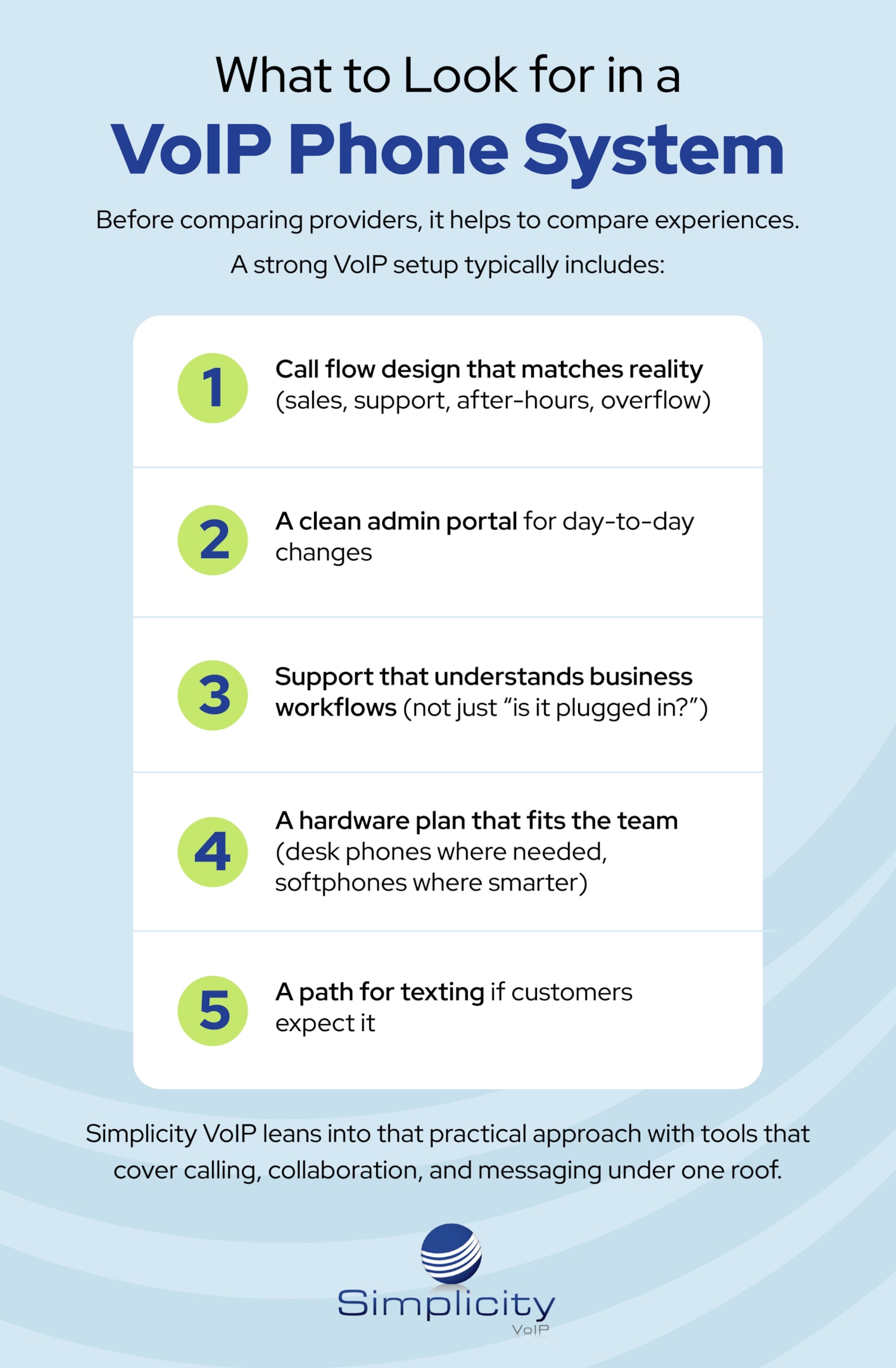
Here’s what sets Simplicity’s business phone system apart:
-
Flexible plans sized for your business (no bloated extras, just what you’ll use)
-
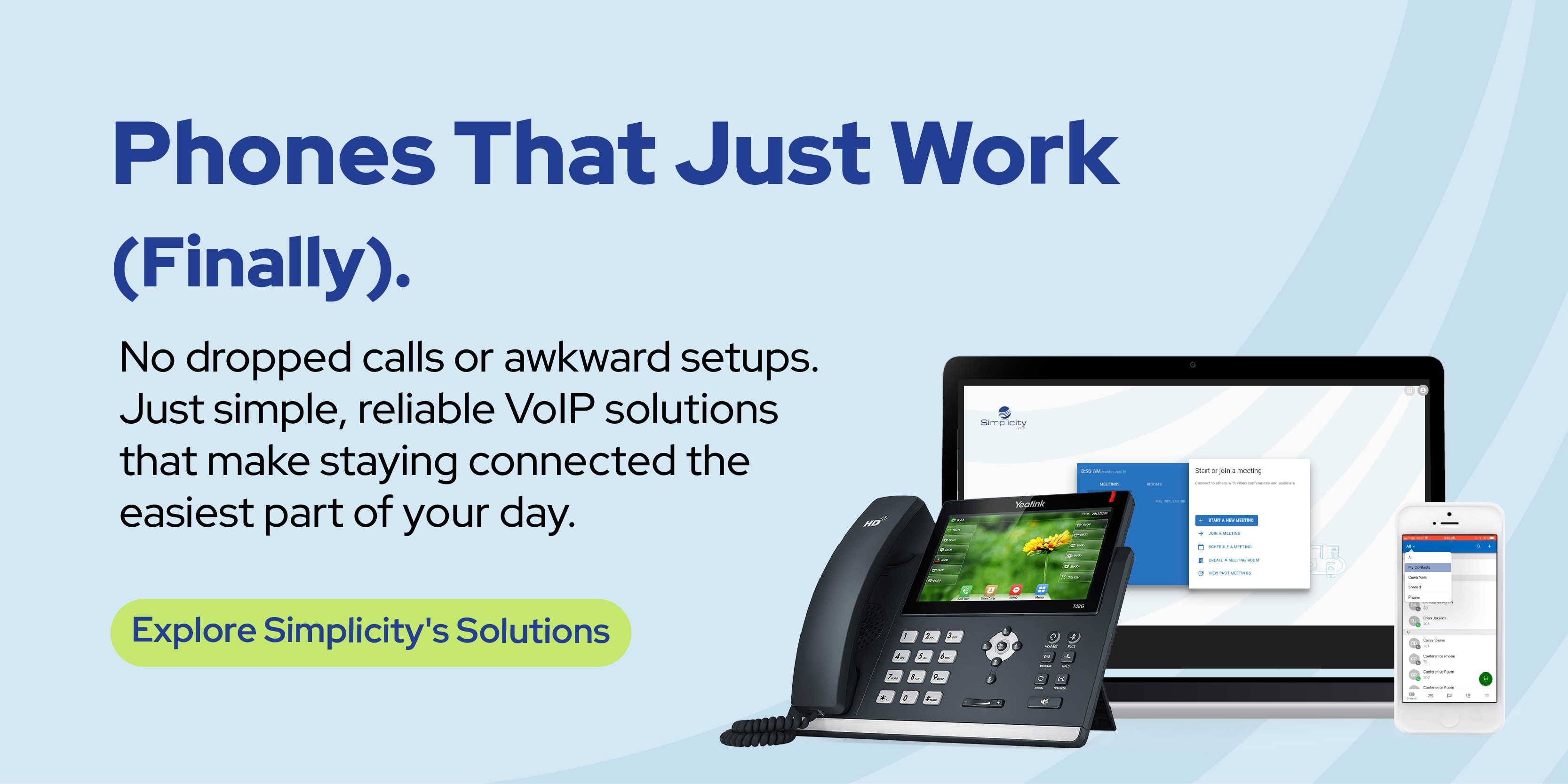
Reliable cloud calling that works across desk phones, laptops, and mobile apps
-
Built-in advanced features like auto attendants, voicemail-to-email, call queues, and more
-
A clean online portal to update users, call flows, or greetings in real time
-
Support that actually picks up the phone (and sticks with you past setup)
-
Equipment options that fit your budget, whether you're buying or leasing phones
Plus, if you’re still using PRI lines or older systems, Simplicity makes the transition easy with personalized onboarding, number porting help, and a team that gets what small and mid-sized teams really need from a phone system.
Ready to see how it could work for your business? Get a quote from Simplicity VoIP and start building a phone system that fits.

.jpg?width=352&name=scott-graham-5fNmWej4tAA-unsplash%20(1).jpg)