
When customers see an unknown number during a phone call, the vast majority ignore it. Some block calls immediately. Others assume the caller is fraud or one of many spam calls flooding mobile devices every day.
That creates a serious problem for businesses that rely on outbound calls for sales, support, appointment reminders, customer communication, and follow-ups. If your business name doesn't display correctly, your calls may never get answered.
This is why more businesses are opting for Branded Caller ID and modern branded calling strategies. While many businesses still rely on CNAM databases and traditional caller ID systems tied to the PSTN (public switched telephone network), newer branded calling solutions give businesses more control over how calls appear across carrier networks and mobile devices.
Understanding the difference between Branded Caller ID and CNAM can help improve answer rates, customer trust, brand recognition, and the overall customer experience.
Why Customers Ignore Business Calls
Consumers are overwhelmed with unknown calls, spoofed numbers, robocalls, and fraud attempts. Even legitimate outbound calls from healthcare organizations, government agencies, and service teams often go unanswered because customers don't recognize the caller.
In a lot of cases, customers only see the phone number instead of a recognizable business caller identity. That hurts customer satisfaction, customer engagement, and brand reputation.
Research shows that 75 percent of consumers are more likely to answer calls when they see a recognizable brand name, logo, or reason for the phone call. Branded calling also helps reduce unanswered calls because customers recognize who is contacting them at the first ring.
For businesses managing appointment reminders, no shows, support callbacks, and customer service outreach, more calls answered can directly increase conversions and improve engagement.
What Is CNAM?
CNAM stands for Caller ID Name. It's the traditional system carriers use to associate a caller name with a telephone number.
When a business places a phone call, the receiving carrier may perform a CNAM lookup through CNAM databases to retrieve caller ID information connected to that phone number.
This process has supported business communications for years, but it comes with limitations.
How CNAM Works
A service provider submits your business caller information into CNAM databases.
During an incoming call:
- The carrier checks the phone number
- The network performs a CNAM lookup
- The caller name data is retrieved
- The information may display on the recipient's device
The keyword is “may.” Many modern mobile devices and major carriers, including T-Mobile and other wireless networks, don't rely entirely on traditional CNAM systems anymore.
That's one reason businesses sometimes see outdated business name information, blank caller ID displays, or “no CNAM” issues.
What Does “No CNAM” Mean?
“No CNAM” usually means the carrier couldn't retrieve caller ID data connected to the number. Instead of a verified caller name, consumers may see only the phone number or an unknown number.
This often happens when:
- CNAM records were never updated
- A phone number was reassigned
- Data has not propagated across networks
- The carrier ignores older CNAM delivery methods
- The business uses outdated voice systems
What Is Branded Caller ID?
Branded Caller ID is a modern version of caller identity that goes beyond traditional caller ID and CNAM.
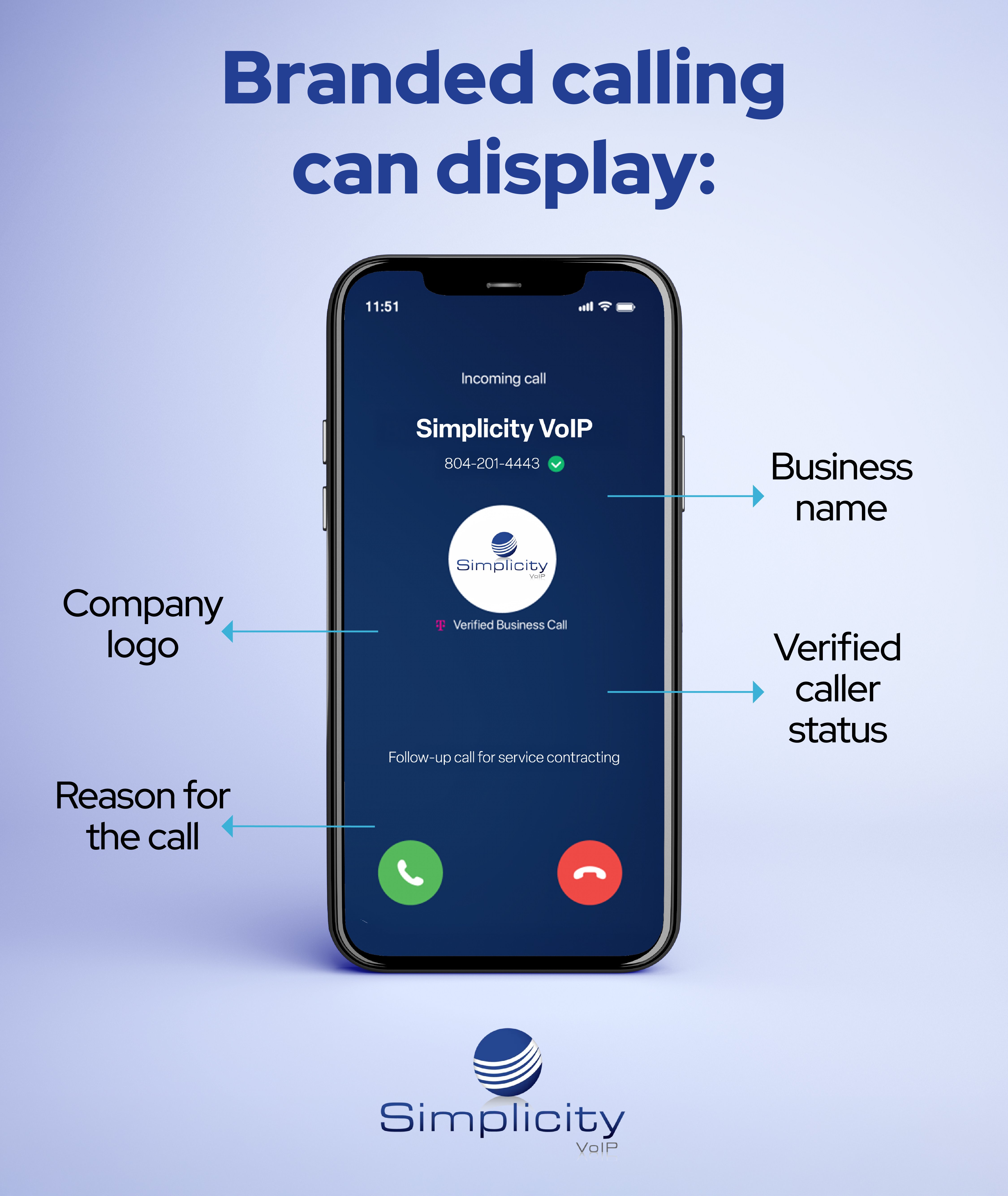
Instead of displaying basic caller data alone, branded calling can display:
- Business name
- Company logo
- Verified caller status
- Reason for the call
- Department information
- Verify ownership of the phone number
- Register the brand
- Authenticate calls using STIR/SHAKEN protocols
- Deliver verified caller ID information
- Display branded content like logos and call reasons
- CNAM is traditional caller name data
- Branded Caller ID is enhanced branded calling designed for modern mobile devices
- Branded caller ID can improve answer rates by up to 105 percent
- 73 percent of consumers view brands more favorably when a logo and business name display during calls
- Two-thirds of adults are more willing to engage with verified brands during an incoming call
- Appointment reminders
- Delivery updates
- Support follow-ups
- Billing notifications
- Customer service outreach
With branded calling, businesses can verify their identity and provide richer call data directly to supported smartphones and carrier systems.
Unlike older CNAM systems tied heavily to the PSTN, branded calling solutions integrate with carriers and mobile devices more directly.
How Does Branded Caller ID Work?
To implement Branded Caller ID, a business typically works with a trusted service provider that supports branded calling.
The provider helps:
Rich call data, or RCD, helps businesses display their logo, business name, and verified purpose for the phone call.
This process helps consumers recognize legitimate calls while helping carriers identify bad actors attempting spoofing or fraud.
Branded Caller ID vs. CNAM
The easiest way to compare them is this:
- CNAM is traditional caller name data
- Branded Caller ID is enhanced branded calling designed for modern mobile devices
|
Feature |
CNAM |
Branded Caller ID |
|
Displays caller name |
Yes |
Yes |
|
Supports logo display |
No |
Yes |
|
Uses branded calling verification |
No |
Yes |
|
Optimized for smartphones |
Limited |
Yes |
|
Supports authenticated calls |
Limited |
Yes |
|
Helps build customer trust |
Somewhat |
Strongly |
Traditional caller ID still matters, but branded caller experiences are becoming more important because consumers increasingly rely on mobile devices and carrier trust indicators.
Why STIR/SHAKEN Matters
STIR/SHAKEN is a call authentication framework designed to verify that calls are coming from legitimate sources.
It helps carriers reduce spam, spoofing, and fraud by authenticating outbound calls before they reach consumers.
Branded calling and STIR/SHAKEN work together to create authenticated calls that build trust with customers.
Without verification, legitimate business calls may appear suspicious or receive “Spam Risk” labels.
In July 2023, the FTC launched Operation Stop Scam Calls, one of the largest efforts ever focused on reducing phone fraud and protecting consumers from misleading calls.
Why Branded Calling Improves Answer Rates
Branded calling directly impacts answer rates because consumers are far more likely to answer when they recognize the caller.
Studies show:
For businesses running sales outreach, customer support, or call centers, branded calling can create higher ROI by reducing unanswered calls and improving customer experience.
It also helps customers recognize important service calls involving:
How to Set Up Branded Calling
Businesses interested in branded calling should work with a communications service provider that supports branded calling solutions.
The setup process typically includes:
- Verifying ownership of the business phone number
- Registering your brand and logo
- Enabling STIR/SHAKEN authentication
- Submitting caller ID information to participating carrier networks
- Testing display behavior across devices
Some providers also allow businesses to customize call reasons and branded caller details for different outbound calls.
Common Questions About Caller ID
How much does branded calling cost?
Costs vary depending on the carrier, service provider, number volume, and branded calling features included.
What does *82 do to your phone?
*82 is a caller ID feature code that temporarily re-enables caller ID display for outgoing calls after caller blocking was activated.
Does *31# hide your number?
Yes. In some regions, *31# can hide caller ID information for outbound calls.
What does *57 do on a cell phone?
*57 is commonly used for call tracing after harassing or suspicious calls.
What does “Spam Risk” mean on caller ID?
It means the carrier suspects the caller may be spam or fraudulent based on call behavior, reputation data, or missing verification.
Improve Your Caller Identity with Simplicity VoIP
Today’s businesses need more than basic caller ID. They need branded calling, verified caller identity, and reliable voice solutions that help customers answer with confidence.
Simplicity VoIP helps businesses modernize communications with solutions that support Branded Caller ID, branded calling verification, and better customer communication experiences.
Whether your organization wants to improve answer rates, support authenticated calls, reduce spam concerns, or strengthen brand visibility during outbound calls, the right communication solutions can help build customer trust and improve customer experience.
Learn more about Simplicity VoIP’s Branded Caller ID and business communications solutions and discover how branded calling can help more customers recognize and answer your calls.