
A call from a traditional desk phone used to have a fairly predictable starting point: the phone was installed at a known physical address and generally stayed there.
Modern business communications are much more flexible. Employees can use the same phone number from a desk phone, laptop, mobile app (on iPhone, update E911 address in Phone settings; on Android, update E911 address in Network settings), or other device. A company might have multiple devices, offices in different cities, remote workers, and cloud-based VoIP services connecting everyone through the internet.
That flexibility makes E911 configuration an important part of any phone system deployment or modernization project.
What Is E911?
The 911 Act made 911 the universal emergency number in 1999. E911, short for Enhanced 911, expands traditional 911 functionality by helping route emergency calls to an appropriate PSAP and providing information that can assist the 911 center in identifying where help is needed.
The Wireless Communications and Public Safety Act took effect in 1999.
A public safety answering point (PSAP) is the emergency communications center that receives and processes 911 calls. Depending on the jurisdiction, call takers can coordinate police, fire, medical, or other emergency services.
In the U.S., 911 serves as the familiar universal emergency number. When someone makes an emergency request, the goal is to get the call to the correct PSAP with enough location information and additional information to help first responders reach the right place.
Why Does Location Matter With Business VoIP?
With a fixed traditional phone, the telephone number and installation address were closely tied together.
A VoIP (voice over internet protocol) phone doesn't have to stay put because it works over an IP network; a user can take a phone home, sign into an app from another office, or use the service from a different city.
That creates a practical question: if the person calls 911, what address is associated with the call?
Accurate location data helps emergency services locate the caller and send responders to the right place. Depending on the system and service, that information can include a street address plus more specific details about where the person is inside a building.
For businesses, just having working access to 911 isn't the end of the configuration process. The caller's location also needs to be considered.
Use the USPS Address Lookup tool for correct E911 addresses.
What Is a Dispatchable Location?
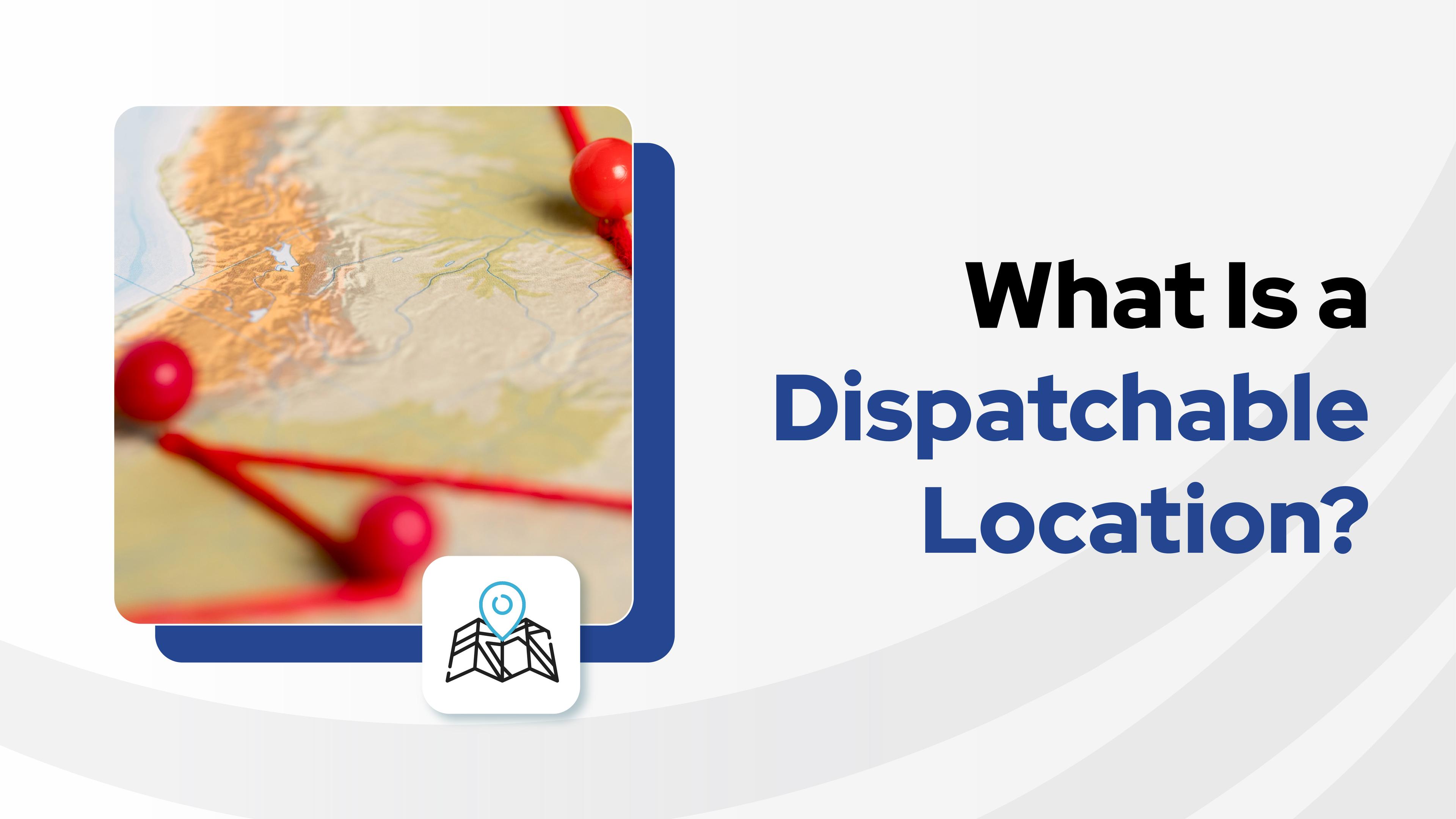
A dispatchable location is location information detailed enough to help responders find the caller. FCC guidance describes it as a validated street address plus information such as a suite, apartment, or similar detail when necessary.
In a business setting, dispatchable location information could involve the building address along with details like a suite, floor, or room number, depending on the environment and applicable requirements.
Consider a business campus with several buildings or a company occupying multiple floors of a high-rise. Sending emergency responders to the property address is useful. Giving them information that identifies where within that property the emergency originated can be much more useful.
How Does E911 Work with a Cloud Phone System?
When someone places 911 calls through an appropriately configured business VoIP service, the system and provider use associated data to help route the call toward the emergency communications center serving that location.
Historically, 911 networks have used components like a selective router to direct calls based on location and routing information. Modern systems and new technologies continue to change how that information is delivered, particularly as communications move toward internet protocol infrastructure.
FCC rules require covered interconnected VoIP providers to support 911 calling and provide location and callback information to the appropriate emergency authority when it can receive and use that information. The FCC uses the specific term interconnected VoIP; the broader phrase interconnected voice can be used conversationally, but it isn't interchangeable with every type of voice service.
For the business using the service, the practical takeaway is straightforward: emergency calling should be reviewed during deployment rather than assumed to just configure itself.
What Changes When Employees Can Move Their Phones?
Phone mobility is useful until the system's stored location no longer matches where the user is working.
A user could take the caller's device from headquarters to a branch office or work from another approved location. If location records aren't updated appropriately, the emergency call could carry outdated information.
That's why businesses using cloud communications need a process for maintaining accurate location records as users and devices move.
The same challenge appears differently with wireless phones and cellular networks. Wireless 911 systems can use network- and device-based location methods involving cell towers, a cell site, or a base station along with other positioning information. Historically, wireless E911 development included Phase II (E911 Phase I requires location data within 100 meters for 67% of calls; E911 Phase II requires location data within 50 to 300 meters accuracy) location requirements designed to provide more precise caller location information than simply identifying the serving cell site.
You can also encounter technical descriptions involving a base station transmitting a caller's signal. Those wireless methods shouldn't be assumed to work exactly like the location configuration used by a business cloud phone platform.
Similarly, wireless carriers and mobile text-to-911 services have their own technical considerations. Businesses should focus on how emergency calling works within the particular communication system their employees use.
What Are Kari's Law and RAY BAUM'S Act?
Two federal measures are especially relevant when businesses discuss emergency calling.
Kari's Law
Kari's Law addresses certain multi-line telephone systems, or MLTS, commonly found in offices, hotels, campuses, and similar environments.
For covered systems, the law requires direct dialing of 911 without requiring a caller to first dial a prefix or outside line. It also includes notification requirements intended to alert designated personnel when a 911 call is placed.
In practical terms, someone facing an emergency shouldn't have to remember an additional digit before calling 911.
RAY BAUM'S Act
RAY BAUM'S Act led to FCC rules addressing the delivery of dispatchable location with 911 calls across covered technologies. The aim is to provide the PSAP with location information that can help responders find the caller rather than identifying only a broad building or account location.
Requirements vary based on system type, deployment, and other circumstances, and state or local rules can also apply. Businesses should work with qualified providers and appropriate legal or compliance resources when determining the requirements for their specific environment.
The FCC's Public Safety and Homeland Security Bureau provides additional federal guidance on these issues.
Is E911 the Same as Wireless 911?
No. The goal is similar, but the technologies used to determine and communicate location can differ.
A mobile caller may move between locations while connected through wireless infrastructure. A business IP phone may have a registered location within an office. A softphone can introduce another layer because the user might sign in from somewhere else.
The 911 center still needs useful information about the caller, including a callback number and location where available. How that information reaches the center depends on the technology involved.
This is why businesses shouldn't just assume a cloud phone behaves exactly like a mobile phone just because both can make calls over modern networks.
What Should Businesses Review When Modernizing Their Phone System?
Emergency calling belongs on the implementation checklist whenever a company changes providers, moves locations, opens another office, introduces cloud calling, or expands remote work.
Review:
- Which employees and devices have 911 calling capability
- The location data associated with each office or endpoint
- Whether building details beyond the main address are necessary
- How locations are updated when devices move
- How your provider routes calls to the appropriate PSAP
- Who receives internal notifications when an emergency call is placed
- How calling behaves if the primary internet connection is unavailable
- Procedures for testing and maintaining the configuration
Businesses should also make sure employees understand when 911 is appropriate. A non-emergency matter should be directed to the relevant local resource rather than the emergency system. The National 911 Program notes that 911 is intended for situations requiring immediate police, fire, or medical assistance.
Emergency Calling Should Be Part of Every Communications Change
A modern phone system can give employees far more flexibility than older fixed-line technology, but that flexibility changes how a location has to be managed.
Whenever a business changes its service, adds locations, moves to VoIP services, or enables greater device mobility, E911 deserves a place in the conversation. Check where calls will route, what location the system will provide, and how that information stays current over time.
Simplicity VoIP can help businesses review their communications environment and configure modern phone solutions with emergency calling requirements in mind.