
You don’t need to overhaul your phone system to bring it into 2026, just how it connects to the outside world.
If you’re still using legacy phone lines or expensive PRI circuits, you’re likely paying more than you need to and getting less than you should.
This is where a SIP trunk provider can help you bridge the gap.
Instead of ripping out your existing PBX, they help it evolve by connecting it to the public phone network through SIP trunking: a virtual solution that routes calls over your internet connection instead of outdated physical lines.
Curious how it all works? You’re in the right place.
In this beginner-friendly guide, we’ll explain what SIP trunking actually is, what a SIP trunk provider is responsible for, and how to tell if your business is ready to make the switch.
Let's go.
First, What Is SIP Trunking?
SIP stands for Session Initiation Protocol. It’s the technology that sets up and tears down voice calls over the internet. A trunk is just a fancy term for a bundle of virtual phone lines.
Put them together, and SIP trunking means using the internet to send phone calls in and out of your building, rather than relying on analog lines or legacy PRI circuits.
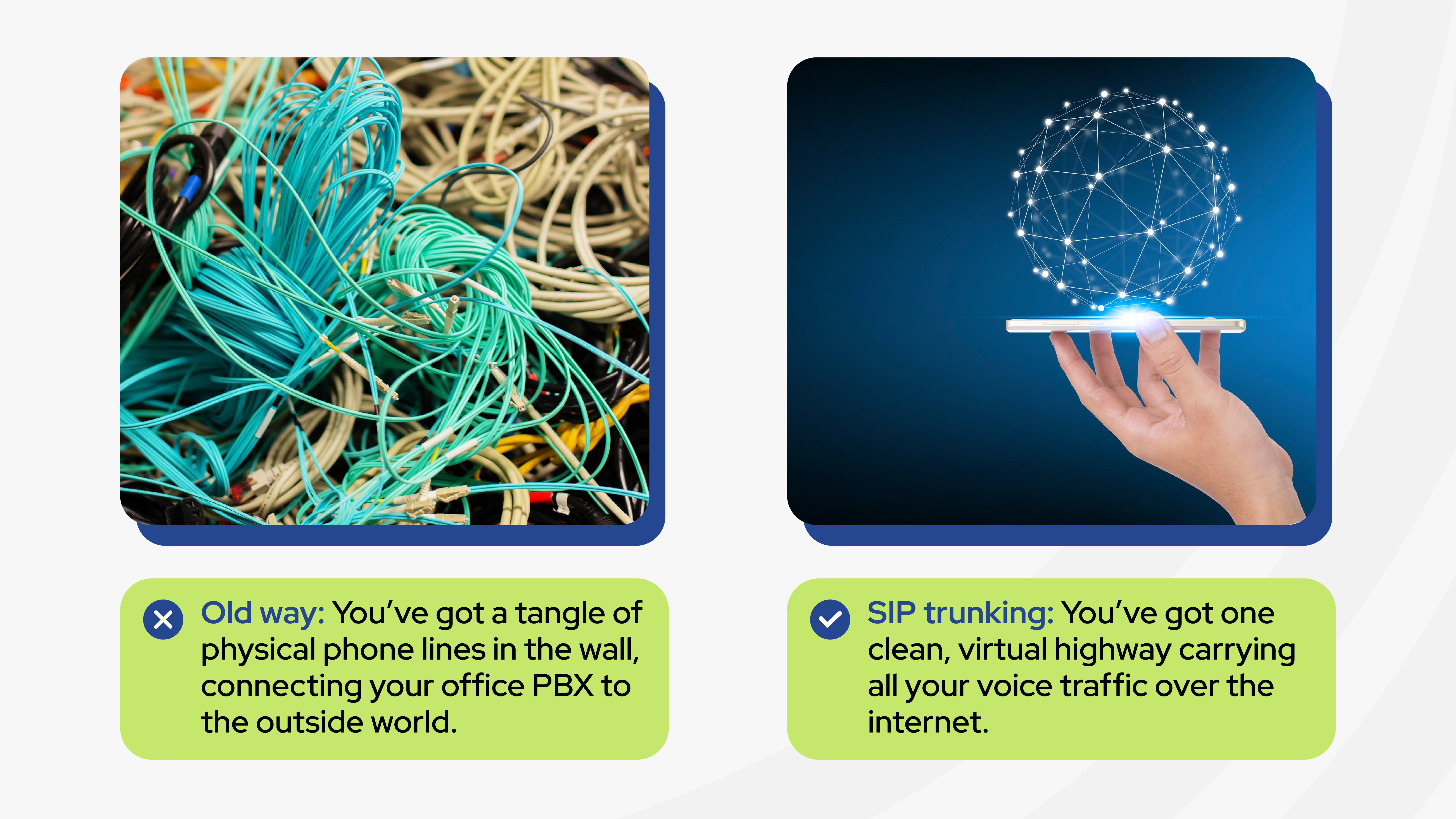
How SIP Trunking Works: A Quick Overview
With a SIP trunk provider like Simplicity VoIP, your PBX connects to the cloud and then routes calls to any landline or mobile number worldwide via the PSTN.
Here’s what that looks like "under the hood":
-
Your PBX stays in place
-
The SIP trunk creates a secure virtual connection to the internet
-
Voice calls are converted into data and routed to/from the PSTN
-
The SIP trunk provider handles call routing, number management, and reliability
You keep full control of your system without needing new hardware or a rip-and-replace VoIP migration. This brings us to an important point.
Want a more technical explanation of a SIP Trunking service? In this blog post, we break down SIP trunking a little deeper. .
SIP vs PRI: What’s the Difference?
If you're like many businesses, you've probably relied on PRI (a.k.a. physical T1 lines) to power your business phone service and you're wondering how SIP trunking stacks up.
Well, both SIP trunking and PRI connect your PBX to the outside world. They just do it in different ways.
Here's a quick comparison to help you out.
|
Feature |
PRI |
SIP Trunking |
|---|---|---|
|
Connection Type |
Physical (T1 line) |
Virtual (over the internet) |
|
Scalability |
Fixed (23 channels per circuit) |
Flexible, add channels as needed |
|
Equipment |
Requires PRI card in PBX |
Works with most IP-capable PBX systems |
|
Cost |
Higher monthly fees |
Lower per-call and monthly costs |
|
Installation Time |
Slower |
Faster, often within days |
|
Flexibility |
Limited to physical location |
Make/receive calls anywhere |
If you’re looking for more scalability and cost savings, SIP trunking might be the best move. However, if your environment still requires PRI, don't despair! Simplicity VoIP offers both SIP and PRI trunking services, so you can find the right fit, not force a one-size-fits-all upgrade.
Dive into how SIP trunking service can reduce upfront costs (and provide long-term cost savings) in our previous blog.
When Is a SIP Trunking Solution the Right Choice?

As we mentioned before, not every business is ready to rip and replace their phone system. SIP trunking offers a smart, in-between path that keeps your existing investment in place while adding the modern phone system features you need.
SIP trunking makes the most sense when:
-
You already have an on-prem PBX and want to modernize without starting from scratch.
-
You’re looking to cut costs on phone service without sacrificing quality.
-
Your business is growing, and you need an easy way to add phone lines.
-
You want to reduce downtime and improve reliability with a virtual setup.
-
You need remote or multi-site call connectivity.
In short, SIP trunking is the bridge between what you have now and where you want your communications to go.
Curious about how to deploy a SIP Trunking solution? We broke it down into 5 easy steps to help you make the switch with ease.
What a SIP Provider Actually Does
Now that you know what SIP trunking is, you're probably wondering, "What exactly is a SIP trunk provider responsible for?" In short, they make sure your phone system can receive inbound or place outbound calls over the internet reliably, securely, and clearly.
Here’s what we handle behind the scenes:
1. Connection to the PSTN
Your provider links your PBX system to the public switched telephone network so your business can place and receive calls with anyone, whether they’re using mobile phones, landlines, or VoIP services.
2. Call Routing and Capacity Management
They manage how calls get routed, ensure there's enough call capacity (channels), and monitor performance of real time communication. This keeps your team from hearing busy signals or dropped calls during peak hours.
3. Phone Number Porting and Management
When switching from an older system, your existing phone numbers need to be transferred, or "ported," over. A SIP trunk provider handles this process and can manage toll-free and direct inward dialing (DID) numbers, too.
4. Service Reliability and Failover
Providers ensure uptime with built-in redundancies. If one path goes down, your calls automatically reroute through another. That means fewer outages and better business continuity.
5. Support and Troubleshooting
A good SIP trunk provider offers actual customer support (real humans, not just ticket forms) when you need help with setup, configuration, or issues down the line.
What You’ll Need Before Switching to a PBX SIP Trunking Service
Before you flip the switch to SIP trunking, take a minute to sanity-check your setup. A few small prerequisites now can save you a lot of troubleshooting later. You need three things:
1) A SIP-Compatible PBX
Your PBX has to support SIP so it can connect to the provider over the internet. If it does not, an SBC (Session Border Controller) can sometimes bridge the gap. This matters because compatibility is what makes SIP trunking possible without replacing your whole phone system.
2) Strong Bandwidth and Network Infrastructure
SIP trunking runs calls over your internet connection, so you need enough bandwidth and a stable network. QoS (Quality of Service) settings help your network prioritize voice traffic. It will help you protect call quality, even when your team is also streaming, downloading, or using cloud apps.
3) A Reliable SIP Trunking Provider
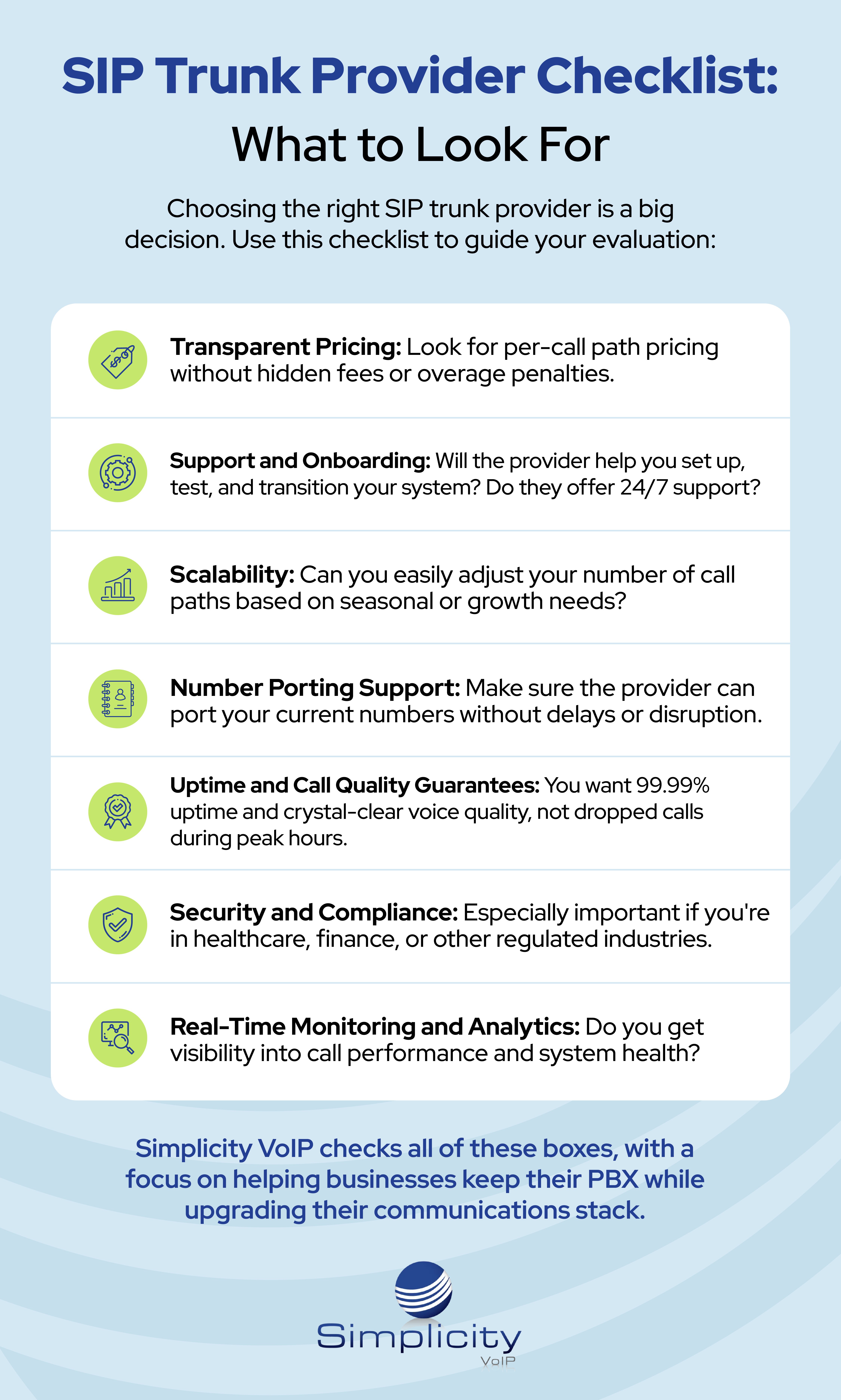
Not just anyone will do. You'll want someone who understands your infrastructure, supports SIP trunk installation, and offers real business-class support. Plus, if you need help vetting options, our blog 10 Factors to Consider When Choosing a SIP Trunk Provider can help you find the right fit. Or check out our free infographic below!
Keep Your PBX, Get Modern VoIP Benefits with Simplicity
There’s no need to rip and replace your entire phone system just to upgrade your business voice with advanced features. The right SIP trunk provider can connect your PBX to the world using modern, flexible, internet-powered trunking.
That provider is Simplicity VoIP.
With our PBX SIP trunking, you keep the equipment you already own, avoid big new capital expenses, and enjoy reliable service with faster setup. If you ever want to go fully cloud in the future, you’re already halfway there.
Ready to modernize your phones without the pain? Request a quote from Simplicity VoIP today.